A Redefine Dental Clinic patient guide, by Dr. Gautam Shetty, MDS Endodontist
A Redefine Dental Why Some Fillings Last 20 Years — And Others Crack Within Two
If you’ve ever had a filling or a crown fail — a cusp that suddenly chipped off, a tooth that cracked years after a “successful” root canal, or a filling that needed replacing again and again — you’ve probably wondered: why does this keep happening?
At Redefine Dental Clinic, this is one of the most common questions we hear, and it deserves a real answer, not just “teeth wear out.” Because the truth is, how a tooth is restored matters just as much as whether it’s restored at all. And the reason comes down to something most patients have never been told: your tooth isn’t just a hard, solid block. It’s a carefully engineered structure — and treating it that way is exactly what has shaped how we practice.
Your Tooth Works Like a Dome — And That Changes Everything
Think of the dome of a grand old building — the kind that has stood for centuries without collapsing. Domes are shaped the way they are for a reason: they’re extremely good at handling forces that push down and inward, but very poor at handling forces that pull them apart.
Your tooth enamel works on exactly the same principle. It forms a dome-like shield over the tooth, and it’s specifically shaped to take the force of your bite and turn it into a safe, evenly distributed pressure — protecting the softer layer underneath, called dentin, from the kind of pulling-apart stress it isn’t built to handle.
As long as that natural “dome” of enamel is intact and properly supported, your tooth can comfortably handle a lifetime of chewing. The problem starts the moment that dome is broken — by decay, by an old filling that’s lost its seal, or by a cusp that’s left without proper support after treatment.
Once that happens, the forces of biting no longer flow safely around the tooth. Instead, they concentrate directly into weak points — and that’s when cracks begin. It’s a slow, often silent process, which is why so many patients are shocked when a tooth that “felt fine” suddenly fractures.
Why Some Materials Protect Your Tooth — and Some Don’t
This is exactly why the type of filling or crown used makes such a dramatic difference to how long your tooth actually lasts.
Older materials like amalgam (the traditional silver-grey filling) simply sit inside a cavity — they don’t bond to the tooth, and they do nothing to rebuild that natural dome-like protection. Research shows teeth restored with amalgam fracture at roughly 7.5 times the rate of teeth restored with modern bonded, tooth-coloured materials. That’s not a small difference — it’s the difference between a filling that outlasts you and one you’ll likely be back in a dental chair for within a few years.
At Redefine Dental Clinic, this research is central to how we plan treatment, not an afterthought. Whenever possible, we use bonded, adhesive restorations that genuinely fuse with your remaining tooth structure — rebuilding the tooth’s natural strength instead of just occupying space where the decay used to be.
Why We Often Recommend an Onlay Instead of a Full Crown
One of the most common conversations we have with patients is around crowns. Many patients arrive expecting that a cracked or heavily filled tooth automatically needs a full crown — essentially “capping” the entire tooth. In many cases, this isn’t necessary, and it isn’t always the best long-term choice.
A full crown requires removing a significant amount of your remaining natural tooth structure to make room for it — including a protective band of tooth just below the gumline that plays an important role in how your tooth handles biting force. Removing it, when it isn’t truly necessary, can leave the tooth more vulnerable in the long run, not less.
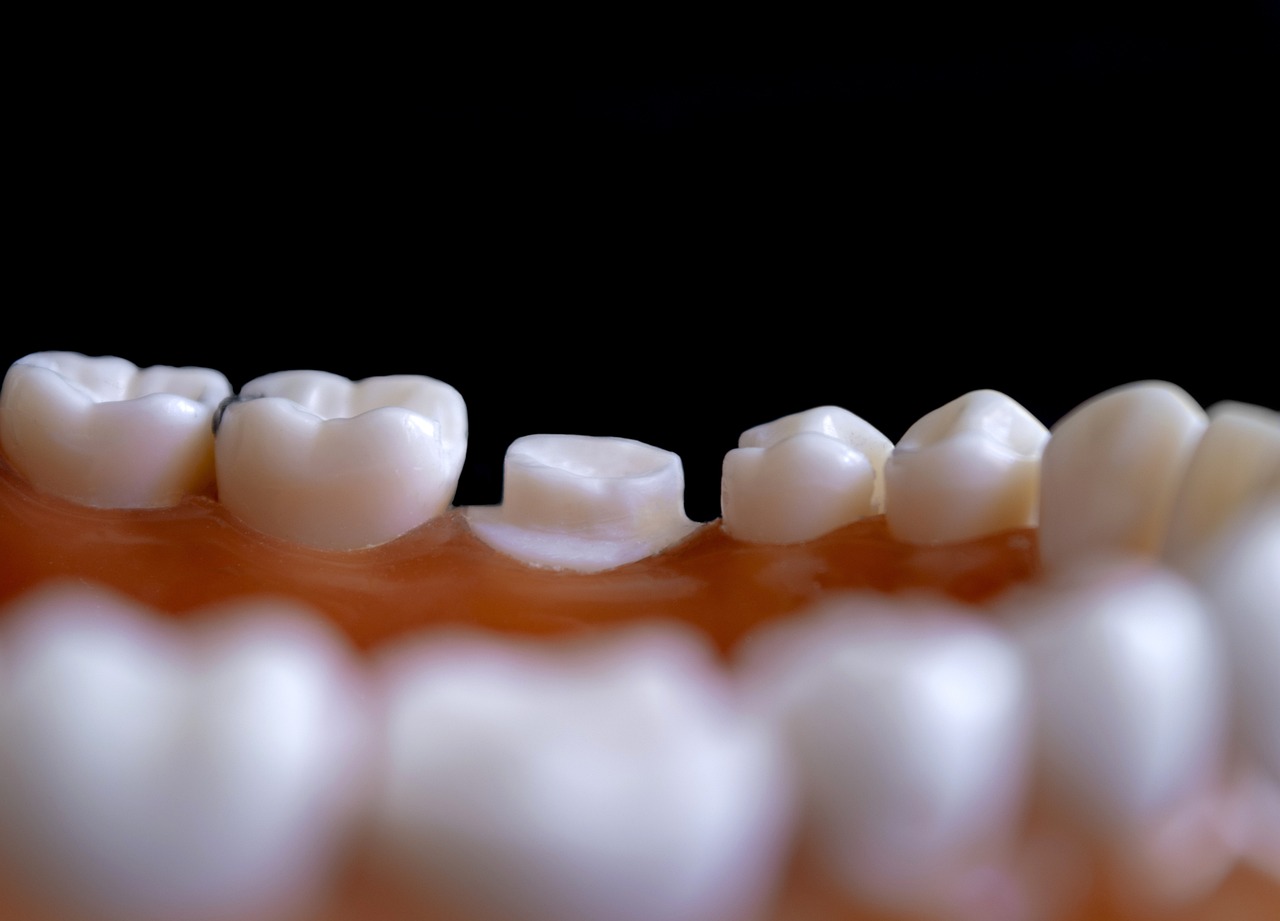
Whenever your tooth structure allows it, we prefer a more conservative option: an adhesively bonded ceramic onlay. This is a custom-made, tooth-coloured restoration that only replaces the damaged portion of your tooth — while preserving as much of your natural, healthy structure as possible. Because it’s bonded (not just fitted), it re-establishes the same protective, load-sharing effect your natural enamel dome once provided.
Patients are often surprised to learn that when properly designed and bonded, this conservative approach can actually reduce both the risk of a future fracture and the severity of any failure, compared to a full crown — while also preserving more of your own natural tooth.
Why We Insist on Working Under the Dental Operating Microscope
None of this matters if it isn’t executed with precision — and that’s where our approach at Redefine Dental Clinic goes a step further.
Every restoration, root canal, and onlay we perform is done under full-time use of the Dental Operating Microscope, magnifying our view up to 26 times. This lets us:
- Identify hairline cracks and weak points invisible to the naked eye, before they turn into fractures
- Shape preparations with rounded internal angles rather than sharp corners — because sharp angles concentrate stress and are often where cracks begin
- Bond restorations with the level of precision needed for them to genuinely function as a laminated, protective unit — not just fill a gap
Combined with mandatory rubber dam isolation (which keeps the area completely dry and contamination-free during bonding) and bioceramic sealers for root canal cases, this is what allows our restorations to behave the way nature intended — protecting your tooth for years, not just months.
What This Means for You as a Patient
If you’re facing a decision about a cracked tooth, a large cavity, or a tooth that’s already had previous treatment, here’s what we want you to know:
- Not every damaged tooth needs a crown. Often, a more conservative, bonded onlay can protect your tooth just as effectively — sometimes more so — while preserving more of what’s naturally yours.
- The material matters as much as the treatment. A bonded, tooth-coloured restoration does far more than fill space; it actively helps protect your tooth from future fracture.
- Precision is not optional. Working under magnification isn’t a luxury add-on — it’s often the difference between a restoration that lasts and one that doesn’t.
- Saving your natural tooth is almost always worth pursuing first. Extraction and replacement should be the last option, not the first suggestion.
This is the thinking behind everything we do at Redefine Dental Clinic — and it’s why our approach to your treatment plan will always start with the same question: what will genuinely make this tooth strong again, not just what will fill the space.
Book a Consultation
If you have a tooth that’s cracked, sensitive, or been previously filled multiple times, we’d encourage you to have it assessed under the microscope before deciding on treatment. In many cases, a more conservative option than you expect may still be available — and catching problems early almost always means simpler, less invasive treatment.
Redefine Dental Clinic Zojwala Complex, Sahajanand Chowk, Agra Road, Kalyan West, Maharashtra 421301
“See What Others Miss. Save What Others Extract.”
Frequently Asked Questions
Why did my tooth crack even though it had a filling?
A filling doesn’t automatically restore your tooth’s natural strength. Older materials like amalgam simply sit inside the cavity without bonding to the tooth, so the tooth’s natural force-distribution system is never rebuilt. Over time, biting forces concentrate at weak points around the filling, and that’s typically where a crack starts.
Do I always need a crown if my tooth is cracked or heavily filled?
Not always. A full crown removes a significant amount of healthy tooth structure, including a protective band of tooth near the gumline. In many cases, a more conservative, adhesively bonded ceramic onlay can protect the tooth just as effectively — sometimes more effectively — while preserving more of your natural tooth.
What’s the difference between an onlay and a crown?
An onlay repairs only the damaged part of the tooth and bonds directly to the remaining structure, whereas a crown covers the entire tooth and requires removing more natural tooth structure to do so. When bonded correctly, an onlay can restore strength without the extra removal a crown requires.
Why does Redefine Dental Clinic use a microscope for fillings and root canals?
Working under the Dental Operating Microscope, at magnification up to 26x, allows us to spot hairline cracks and weak points invisible to the naked eye, shape preparations more precisely, and bond restorations with the accuracy needed for them to function properly for years rather than months.
Is a tooth-coloured filling really stronger than a silver (amalgam) filling?
Yes. Research shows teeth restored with amalgam fracture at roughly 7.5 times the rate of teeth restored with modern bonded, tooth-coloured composite. Bonded restorations attach to the tooth and help redistribute biting force, while amalgam simply occupies space.
How do I know if my tooth can be saved instead of extracted?
Most teeth — even ones that have cracked or been previously treated — can be evaluated for conservative options before extraction is considered. An assessment under magnification helps determine whether a bonded restoration or onlay can still preserve the natural tooth.
Does a root canal weaken a tooth permanently?
Not on its own. What matters most afterward is how the tooth is restored. A root canal-treated tooth protected with the right adhesive restoration — and, where needed, an onlay rather than an overly aggressive crown — can function well for many years.