Tooth Sensitivity After a Filling: Why It’s Still Hurting.
You sat in the dental chair. You got the cavity filled. You went home thinking it was done.
But a week later, that sharp sting is back — cold water, hot chai, biting down on a roti. The sensitivity is still there. Sometimes it’s worse than before the filling.
You’re not imagining it. And it’s not normal.
Best Sensitivity Toothpaste in India — Do They Actually Work?
Walk into any medical store in Kalyan and you’ll find an entire shelf dedicated to sensitivity toothpastes. Sensodyne, Colgate Sensitive, Parodontax, Himalaya, Oral-B Sensitive — all promising relief. Patients spend months trying one after another.
Here’s what those brands won’t tell you:
Sensitivity toothpastes manage the symptom. They do not treat the cause.
| Toothpaste Brand | Active Ingredient | What It Does | What It Doesn’t Do |
|---|---|---|---|
| Sensodyne Repair & Protect | Stannous Fluoride | Blocks exposed dentinal tubules | Cannot fix a leaking filling or cracked tooth |
| Colgate Sensitive Pro-Relief | Arginine + Calcium Carbonate | Seals tubule openings temporarily | Cannot address pulp inflammation or missed decay |
| Parodontax | Stannous Fluoride + Sodium Fluoride | Strengthens enamel | Does not treat root exposure or failed restorations |
| Oral-B Sensitive | Potassium Nitrate | Calms nerve response | Does not seal marginal gaps in a filling |
| Himalaya Sensitive | Herbal blend | Mild relief | No clinical evidence for restoration-related sensitivity |
These toothpastes work for mild enamel erosion or gum recession. They do not work when the root cause is inside the tooth — a leaking restoration, a cracked cusp, inflamed pulp, or a missed canal. If your sensitivity is post-filling, no toothpaste will fix it.
Why Does Tooth Sensitivity Happen After a Filling?
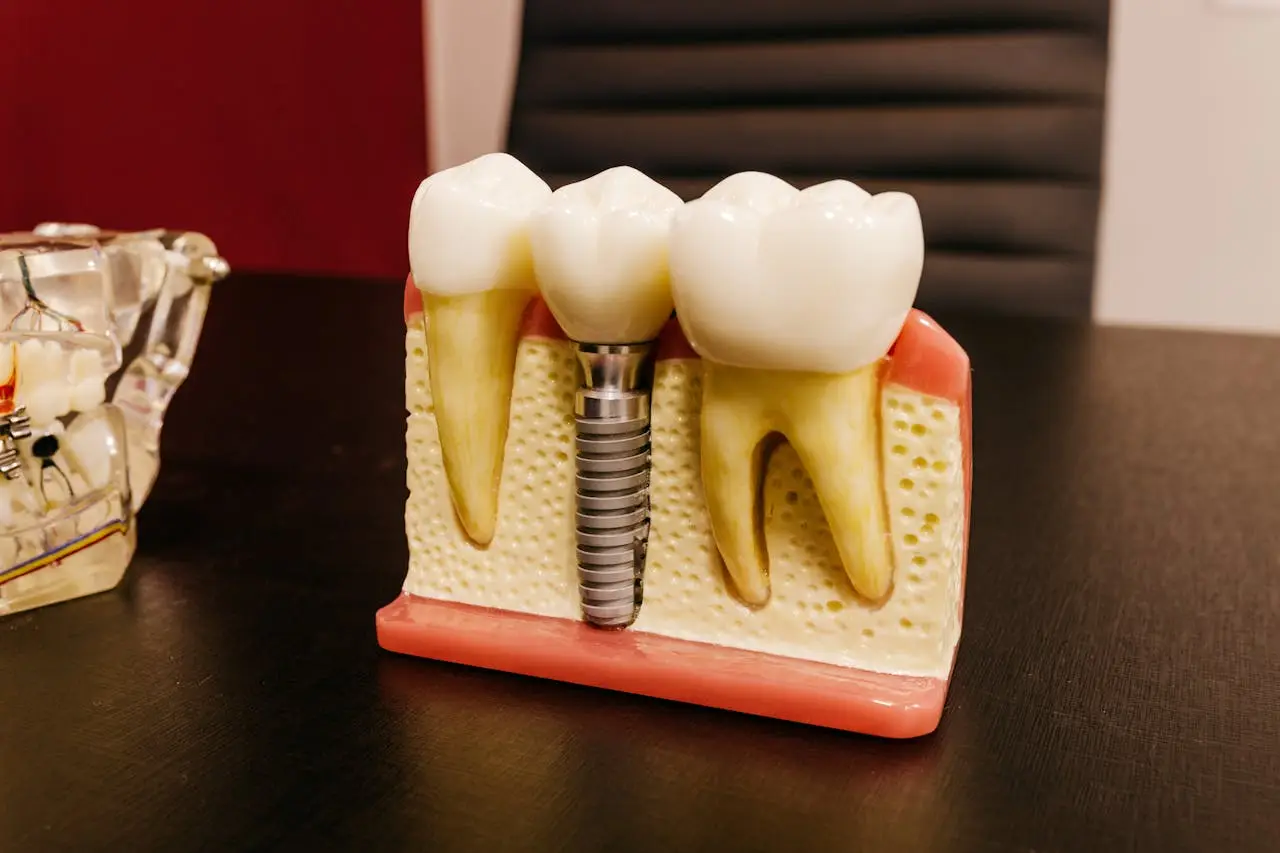
When a general dentist places a filling, they remove decay and pack material into the cavity. Straightforward on paper. But here’s what gets missed:
1. Marginal Gaps — The Invisible Leak
Every filling has a junction — the point where the material meets your natural tooth. If this junction isn’t perfectly sealed (and without magnification it often isn’t), bacteria and temperature changes sneak in. The result: the nerve inside your tooth keeps getting irritated, and your tooth sensitivity after filling continues or worsens.
2. Incomplete Decay Removal
Without magnification, soft or stained dentin that looks clean to the naked eye can still harbor bacteria. When a filling is placed over this, decay continues silently underneath. Sensitivity is often the first sign.
3. Cracked Tooth Syndrome — The Most Missed Cause of Sensitivity After a Filling
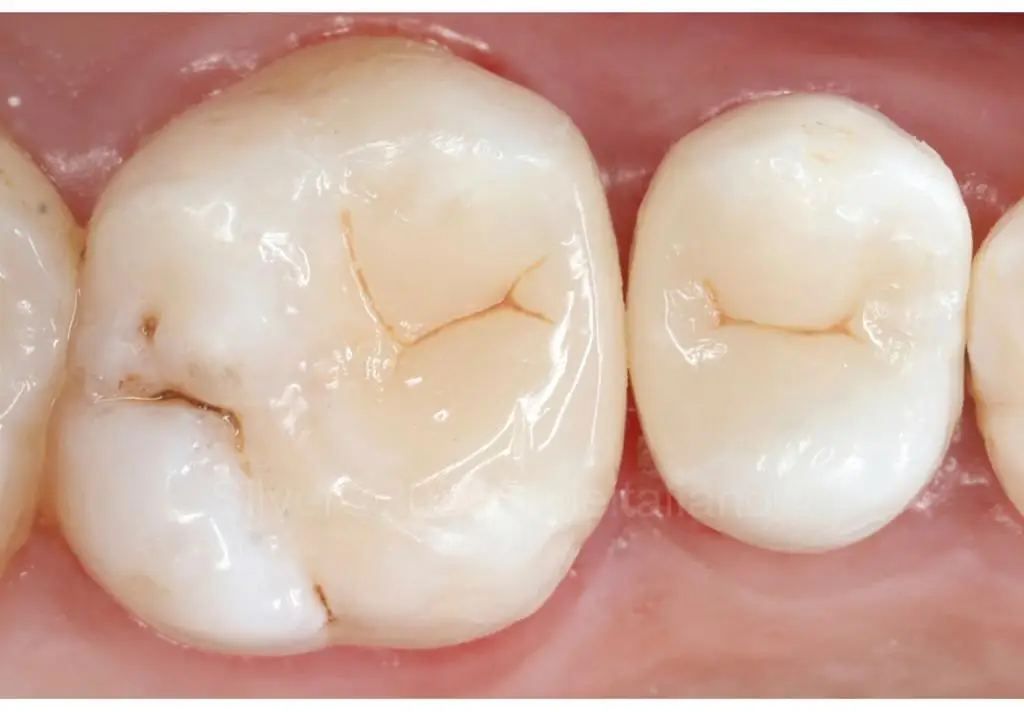
Cracked Tooth Syndrome is one of the most underdiagnosed causes of dental sensitivity in India. A hairline crack doesn’t show up on a standard X-ray. Without a high-magnification microscope, it’s nearly invisible. Patients go from filling to filling, crown to crown, without ever fixing the actual problem.
4. Deep Fillings and Nerve Sensitivity — When You Need an Endodontist
If your cavity was deep, the nerve inside the tooth may have already been irritated before the filling was placed. A general dentist might fill it and hope the nerve settles. Sometimes it does. Often it doesn’t — and the sensitivity you feel is the nerve telling you it needs more than just a filling. This is exactly when an endodontist — a root canal specialist — needs to step in.
5. Incorrect Bite After Filling
This sounds simple but is extremely common. If the filling is even slightly high — even a fraction of a millimetre — every bite puts extra pressure on that tooth. Over time this stresses the nerve, the ligament around the root, and leads to persistent, dull aching sensitivity.
General Dentist vs. Endodontist for Tooth Sensitivity Treatment
| Situation | General Dentist Approach | Endodontist (Specialist) Approach |
|---|---|---|
| Post-filling sensitivity | Wait and watch, prescribe sensitivity toothpaste | Examine with magnification, diagnose root cause precisely |
| Suspected crack | Standard X-ray (often misses cracks) | High-power dental microscope + transillumination + CBCT if needed |
| Deep cavity near nerve | Fill and hope nerve settles | Pre-assess pulp vitality, decide whether filling or RCT is appropriate |
| Failed filling from another dentist | Replace the filling | Identify why the original failed before placing a new one |
| Sensitivity with no visible cause | Refer or prescribe painkillers | Systematic elimination — crack, missed canal, marginal leak, bite analysis |
How a Dental Microscope Finds What X-Rays Miss
At Redefine Dental Clinic, every complex sensitivity case is examined under a high-definition dental operating microscope. This isn’t cosmetic. Here’s what it allows:
- Hairline cracks invisible to the naked eye become clearly visible under 16–25x magnification
- Marginal gaps in old fillings are detected before placing new restorations
- Canal openings that are calcified or hidden are located precisely
- Extent of decay is assessed clearly before any material is placed
A filling placed under magnification fits better, seals better, and lasts longer. This is why endodontists are trained specifically to work in the interior of teeth where precision is not optional.
Signs You Need a Tooth Sensitivity Specialist in Kalyan West
If any of the following apply, don’t wait longer than two weeks:
- Tooth sensitivity after filling has lasted more than 4 weeks
- The pain wakes you up at night
- You feel a sharp jolt when biting on one specific tooth
- Your sensitivity is getting worse, not better
- You’ve already replaced the filling once and it hasn’t helped
- You feel a dull, constant ache rather than a quick sharp pain
Lingering sensitivity — especially pain that stays after the cold or heat is removed — is a sign the nerve is under stress. Caught early, this can often be resolved without a root canal. Left too long, the nerve can become infected and a root canal becomes unavoidable.
Tooth Sensitivity Diagnosis at Our Kalyan West Dental Clinic
At Redefine Dental Clinic, here’s exactly what happens when you come in for persistent tooth sensitivity after a filling:
- Detailed history — when it started, what triggers it, what treatment has already been done
- Clinical examination under magnification — every surface of the tooth is checked
- Vitality testing — to assess the health of the nerve precisely
- Periapical X-ray + CBCT if indicated — to check root structure, bone, and canals
- Clear diagnosis before any treatment — you’ll know exactly what’s wrong and why
- Minimally invasive solution first — if the nerve can be saved, it will be
Our goal is to give you a diagnosis, not just a prescription for Sensodyne.
Frequently asked Question ?
Patient: “Doctor, I got a filling done 2 months ago in Kalyan but my tooth still pains when I drink cold water. My dentist says it will settle on its own. How long should I wait?”
Dr. Gautam: Sensitivity that goes beyond 4 weeks after a filling is not normal and should not be ignored. “It will settle” is appropriate advice for the first 2–3 weeks. Beyond that, it usually means something was missed — a marginal gap, incomplete decay removal, or early pulp irritation. At Redefine Dental, we examine the tooth under magnification and run a pulp vitality test to know exactly what’s happening inside before recommending any treatment. Don’t wait 6 months hoping it improves.
Patient: “I have been using Sensodyne for 8 months but the sensitivity keeps coming back. Is there any permanent solution?”
Dr. Gautam: Sensodyne works by blocking the tiny tubes in your tooth surface temporarily. It’s excellent for enamel erosion or gum recession — but if you have a cracked tooth, a leaking filling, or an irritated nerve, no toothpaste in the world will fix that. The sensitivity keeps coming back because the underlying cause hasn’t been treated. At our clinic, we identify the exact source first. Once that’s treated — whether it’s sealing a marginal gap, treating a crack, or addressing the nerve — the sensitivity resolves at the root level, not just on the surface.
Patient: “My dentist told me I need a root canal but I’m scared. Is there any way to avoid it? The tooth is only sensitive, not paining badly.”
Dr. Gautam: This is a very valid concern, and the honest answer is — it depends on how far the nerve damage has progressed. If the nerve is irritated but still healthy (what we call reversible pulpitis), a root canal is not necessary. We can often resolve it with a precise re-restoration under magnification. But if the nerve has already started to break down, delaying the root canal will only make things worse and more expensive. At Redefine Dental, we test pulp vitality accurately before recommending anything. You’ll never be pushed into a root canal you don’t need — but you’ll also be told clearly if you do.
Patient: “I went to two dentists in Kalyan and both replaced my filling but the pain came back both times. I don’t know what to do anymore.”
Dr. Gautam: When a filling fails twice, the problem is almost never the filling material — it’s the diagnosis. The most common culprits I see in cases like this are hairline cracks in the tooth that weren’t detected, or decay that wasn’t fully removed before the new filling was placed. Both of these are invisible without proper magnification. At Redefine Dental, before we touch a previously treated tooth, we examine it under our dental operating microscope to understand exactly why the previous restorations failed. Treating the same tooth a third time the same way will give you the same result. You need a different approach, not another filling.
Patient: “Doctor, my child’s tooth became sensitive after a filling at school dental camp. Should I be worried? She is only 9 years old.”
Dr. Gautam: Children’s teeth — especially milk teeth with large pulp chambers — are far more sensitive to drilling and filling than adult teeth. Post-filling sensitivity in a child that lasts more than 2 weeks needs to be checked. At that age, the goal is always to save the nerve if possible, because losing a milk tooth too early can affect how the permanent tooth grows. Bring her in for an assessment. We use child-friendly techniques and will explain everything to both you and your daughter before doing anything. The earlier we catch it, the more options we have.
The Bottom Line
Tooth sensitivity after a dental procedure is common. Tooth sensitivity that keeps going after treatment is not something to ignore or mask with toothpaste.
If a filling didn’t fix your pain, the problem likely wasn’t the filling — it was the diagnosis.
A specialist working under magnification, with the right diagnostic tools, finds what was missed. That’s the difference between treating a symptom and treating the problem.
If you’re in Kalyan West and your tooth sensitivity hasn’t resolved after treatment elsewhere — book a consultation at Redefine Dental Clinic. We’ll tell you exactly what’s happening and what to do next.
Dr. Gautam Shetty, MDS Endodontist — Redefine Dental Clinic, Kalyan West Specializing in root canal treatment, complex sensitivity diagnosis, and microscope-assisted dentistry