Root Canal vs Implant — Which is the Right Choice for Your Tooth?
By Dr. Gautam Shetty, MDS Endodontist | Redefine Dental Clinic, Kalyan West
Root Canal vs Implant
t is one of the most common conversations that happens in a dental clinic.
A patient comes in with a tooth that has been troubling them for a while. An X-ray is taken. The dentist says the tooth needs significant treatment. And then comes the question — sometimes from the dentist, sometimes from the patient themselves:
“Should we try to save it, or just remove it and put an implant?”
It sounds like a simple choice. Two options on a table. Pick one.
But it is not simple at all. And for patients across Kalyan, Dombivli, and Thane who are facing this decision, the answer can affect not just one tooth — but the long-term health of your entire mouth.
This post is an attempt to give you what most people never receive in a rushed clinic appointment: a clear, honest, human explanation of both options — so that whatever you decide, you decide it with full understanding.
First — A Perspective Most People Have Not Heard
There is a quiet but important truth in dentistry that does not get spoken loudly enough:
No implant, no matter how well-made or precisely placed, is as good as your own natural tooth.
This is not an opinion. It is biology.
Your natural tooth has a periodontal ligament — a microscopic network of fibres that connects the root to the surrounding bone. This ligament is not just a mechanical attachment. It is a sensory organ. It tells your brain exactly how much force you are biting with. It absorbs shock. It communicates with the bone and helps maintain bone density. It has a blood supply, nerve endings, and a degree of natural flexibility that no implant can replicate.
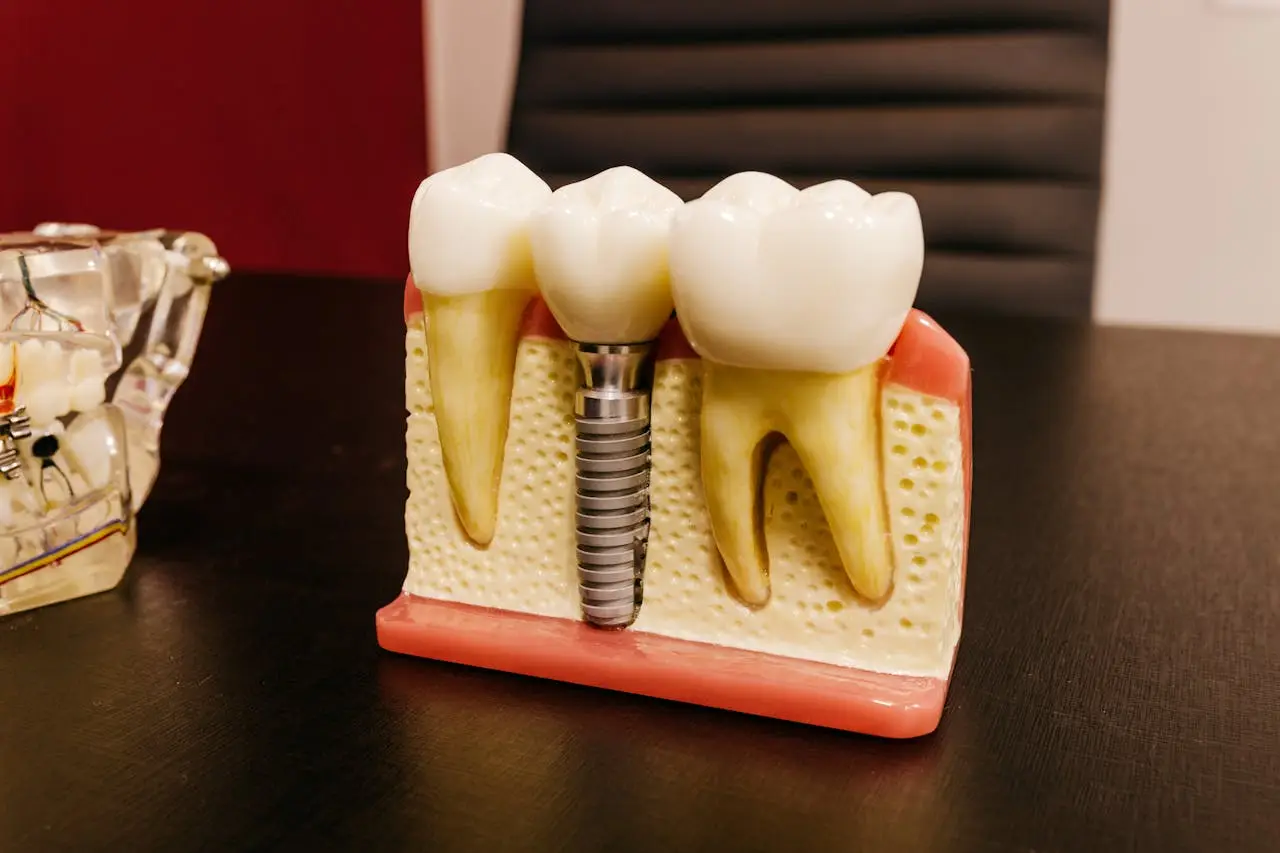
An implant is a titanium screw fused directly to bone. It is an excellent solution when a tooth is truly lost or beyond saving. It can restore function beautifully. But it is a replacement — an engineered substitute for something biological. And like all substitutes, it comes with trade-offs.
This is why the first question — always — should not be “implant or root canal?” The first question should be: “Is this tooth worth saving?”
And in far more cases than patients realise, the answer is yes.
What Is a Root Canal Treatment?
ROOT CANAL TREATMENT IN KALYAN AT REDEFINE DENTAL CLINIC IS BEST IN KALYAN BY DR GAUTAM SHETTY
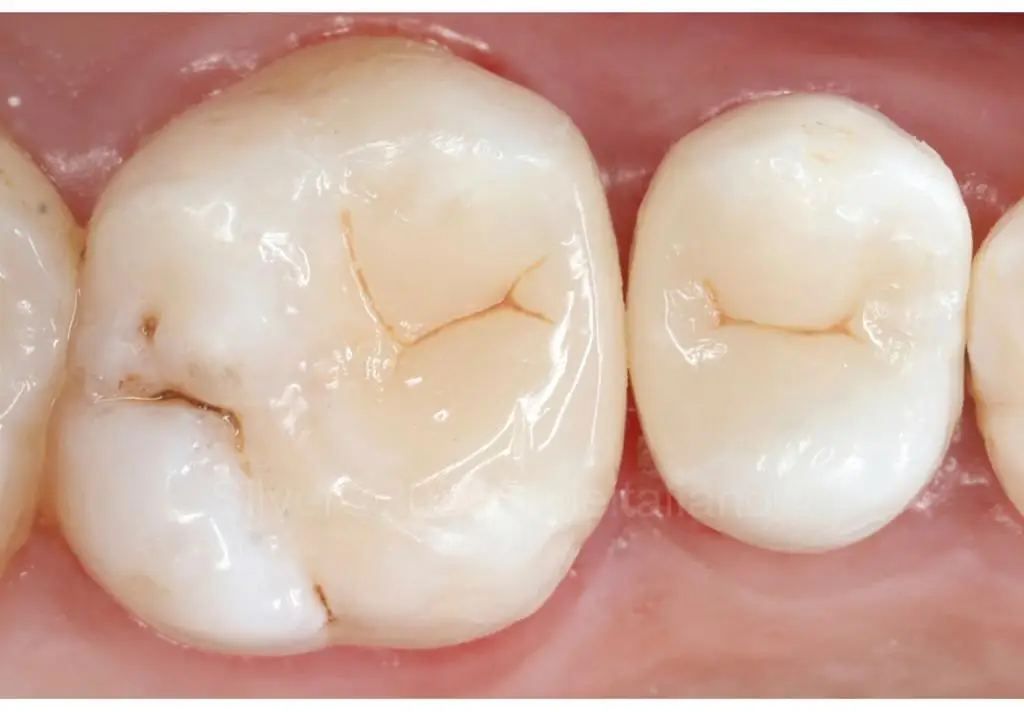
A root canal is a procedure to save a tooth whose nerve and blood supply — the pulp — has been damaged or infected.
The procedure involves removing the infected or inflamed pulp from inside the tooth, cleaning and shaping the microscopic canals within the roots, disinfecting them, and sealing them with a biocompatible material. The tooth is then restored, usually with a crown, and continues to function as a normal tooth.
What a root canal does not do is remove the tooth. The root stays in the bone. The tooth stays in your mouth. Your bite, your bone, your smile — all remain as they were.
At Redefine Dental Clinic in Kalyan West, every root canal is performed under a Dental Operating Microscope. This level of magnification — up to 26 times — allows the complete canal system to be visualised and treated with precision that conventional techniques simply cannot match. Combined with rubber dam isolation and bioceramic sealers, the success rates for microscope-assisted root canals are consistently above 95%.
What Is a Dental Implant?
A dental implant is a titanium post that is surgically placed into the jawbone to replace the root of a missing tooth. Once the implant fuses with the bone over a period of three to six months — a process called osseointegration — a crown is attached on top.
The result looks and functions very much like a natural tooth. Implants are strong, long-lasting, and do not require support from adjacent teeth the way a dental bridge does.
They are an excellent solution. But they are a solution designed for teeth that are already gone — not necessarily for teeth that can still be saved.
Root Canal vs Implant — The Real Comparison
Let us go through the factors that matter most to a patient making this decision.
1. Preserving Natural Tooth Structure
A root canal saves your tooth. An implant replaces it.
When your natural tooth remains, the bone around it continues to receive stimulation through the periodontal ligament. This keeps the bone healthy and dense. When a tooth is extracted, the bone in that area begins to shrink — a process called resorption. This is irreversible. Even with an implant, some bone volume is lost before and during the placement process.
Verdict: Root canal wins — your natural tooth preserved means your bone is preserved.
2. Success Rates and Longevity
A well-performed root canal by a specialist endodontist, followed by proper restoration with a crown, has a long-term success rate that is well documented and highly comparable to implants. Microscope-assisted root canals in particular show excellent long-term outcomes because the entire canal system is treated rather than estimated.
Implants also have excellent long-term success rates — typically above 95% over 10 years in healthy patients. But implants can fail too. Implant failure, particularly due to peri-implantitis (infection around the implant), is a growing concern and its management is significantly more complex than retreating a natural tooth.
Verdict: Both options have excellent long-term outcomes. Root canals treated microscopically are highly successful.
3. Time and Number of Visits
A root canal at Redefine Dental Clinic typically takes one to two appointments, followed by a crown placement. The entire process — from first visit to final restoration — is often complete within two to four weeks.
An implant is a multi-stage process. Extraction of the failing tooth. Healing time. Bone grafting if needed. Implant placement. Osseointegration (three to six months). Abutment placement. Crown fabrication. From start to finish, implant treatment often takes six months to a year.
For patients in Kalyan, Dombivli, and Thane with busy lives and limited time — this is a significant practical difference.
Verdict: Root canal is significantly faster from start to finish.
4. Cost
A root canal with a crown is almost always less expensive than an implant with a crown — particularly in the short term. Implant costs in Kalyan and the surrounding areas include the implant itself, the abutment, the crown, and sometimes bone grafting — each of which adds to the total.
Over a lifetime, a well-maintained natural tooth that has had a root canal costs far less than replacing it with an implant.
Verdict: Root canal is more cost-effective in most cases.
5. Invasiveness
A root canal is performed entirely within the tooth. Nothing is cut, nothing is surgically placed, and no bone is touched.
An implant requires surgical extraction of the tooth, possible bone grafting, surgical placement of the titanium post under local anaesthesia, and a healing period.
For patients who are anxious about dental procedures, or who have medical conditions that affect healing — diabetes, blood thinners, compromised immunity — the less invasive nature of root canal treatment is medically significant.
Verdict: Root canal is substantially less invasive.
6. Feel and Function
Your natural tooth, once treated and crowned, functions and feels exactly as it did before — because it is still your tooth. The sensory feedback of biting, the flexibility, the integration with surrounding tissues — all of this is preserved.
An implant is excellent for function and aesthetics. But it does not have the same sensory feedback as a natural tooth. Some patients describe a subtle difference in how the bite feels. This is normal and expected — it is a prosthesis, not a tooth.
Verdict: Natural tooth wins for sensation and biological function.
ROOT CANAL TREATMENT IN KALYAN AT REDEFINE DENTAL CLINIC BEST IN KALYAN BY DR GAUTAM SHETTY
When Is an Implant the Right Choice?
After reading all of the above, you might wonder — is there ever a situation where extraction and an implant is the better option?
Yes. There are several situations where an implant is genuinely the right choice:
When the tooth cannot be saved. A tooth with a vertical root fracture, severely compromised bone support, or a root that is too damaged for treatment — this tooth cannot be saved by any procedure. Extraction and implant is appropriate here.
When root canal treatment has failed and retreatment is not feasible. Sometimes a tooth has had multiple treatments and the remaining structure is insufficient to support a restoration. In these cases, implant may be the better long-term option.
When the tooth has little remaining structure above the gumline. A tooth that has broken down to the gumline may not have enough structure to support a crown even after root canal treatment. Implant may be more predictable.
When the patient’s overall oral health and hygiene makes root canal outcomes uncertain. In some clinical situations, the prognosis for saving the tooth is genuinely poor, and a fresh start with an implant offers better long-term predictability.
The key point is this: these are clinical decisions that need to be made by a specialist, with proper examination, X-rays, and sometimes a CBCT scan — not based on a quick recommendation or patient preference alone.
The Question Nobody Asks — But Should
When patients across Kalyan, Dombivli, and Thane come to Redefine Dental Clinic facing this decision, there is one question that changes the entire conversation:
“What would you do if this were your tooth, Doctor?”
And the honest answer — every single time — is: I would try to save it first.
Not because root canals are the answer to every problem. But because a natural tooth, saved with precision and care, is a biological treasure that cannot be fully replicated by anything we place surgically.
An implant is a victory of engineering. A saved tooth is a victory of biology.
And biology, when it can be preserved, should always be given the first chance.
A Word About “Quick Extractions”
Across patients who come to Redefine Dental Clinic, a pattern emerges that is worth mentioning honestly.
Some patients arrive having been told elsewhere that their tooth “needs to come out” — only for a thorough microscope-assisted examination to reveal that the tooth was, in fact, treatable. The recommendation for extraction sometimes comes not from clinical necessity, but from the limitations of what can be seen and done without adequate magnification or endodontic expertise.
This is not a criticism. It is a reality of how different levels of clinical training and equipment lead to different clinical decisions.
If you have been told your tooth needs extraction and you are not sure, a second opinion from a specialist endodontist costs very little and could save your tooth entirely.
What Should You Do Next?
If you are facing the root canal vs implant decision right now — here is a simple, practical path forward:
Step 1: See a specialist endodontist for an evaluation of the tooth. Not a general dentist’s opinion — a specialist’s assessment of whether the tooth is genuinely saveable.
Step 2: Get a proper X-ray or CBCT scan so the full picture of the root, bone, and canal anatomy is visible.
Step 3: Understand your prognosis. Ask directly: “If you treat this tooth, what is the realistic chance it lasts 10 years? 20 years?”
Step 4: If the tooth is saveable and the prognosis is good — save it first. You can always extract and place an implant later. You cannot un-extract a tooth.
Step 5: If the specialist confirms the tooth cannot be saved — then move forward with the implant option with full confidence.
Frequently Asked Questions
Is a root canal better than an implant? When a tooth can be saved, a root canal is almost always preferable — it preserves your natural tooth, maintains bone, is less invasive, faster, and more cost-effective. Implants are excellent when a tooth is truly beyond saving.
How do I know if my tooth needs a root canal or extraction? Only a proper clinical examination and X-ray can determine this. A specialist endodontist is best placed to evaluate whether a tooth is treatable. Many teeth that appear hopeless to the naked eye are treatable under microscopic assessment.
Can a root canal treated tooth last a lifetime? Yes. A properly treated tooth with a good crown and regular maintenance can last a lifetime. Many root canal treated teeth outlast the patients who received the treatment.
Is a dental implant permanent? Implants are long-lasting but not automatically permanent. They require maintenance, good oral hygiene, and regular monitoring. Implant failure, while uncommon, does occur.
How long does a root canal take at Redefine Dental Clinic? Most root canals are completed in one to two appointments of 60–90 minutes each. Complex cases or retreatment cases may require additional visits.
What is the cost difference between a root canal and an implant in Kalyan? Root canal treatment with a crown is generally significantly less expensive than a dental implant with a crown in Kalyan. Implant costs also vary based on whether bone grafting is needed.
Can I get a root canal done in one day? Many straightforward cases can be completed in a single appointment. Your endodontist will advise based on the complexity of your specific tooth.
Your Tooth Deserves a Second Chance
If you are sitting with an X-ray in your hand, a dentist’s recommendation echoing in your head, and a feeling of uncertainty about what to do — that uncertainty is worth honouring.
A second opinion from a specialist costs very little. But it could be the difference between keeping your tooth for the rest of your life, and replacing it with something that will never be quite the same.
At Redefine Dental Clinic in Kalyan West, we see patients from Kalyan, Dombivli, Thane, Ambernath, and surrounding areas who come in having been told there is no option but extraction — and in many of those cases, the tooth is still saveable.
Before you decide, let us take a proper look.
Dr. Gautam Shetty is an MDS Endodontist and founder of Redefine Dental Clinic, Kalyan West. With over 10,000 root canal treatments performed under the dental operating microscope, he specialises in complex, retreatment, and microscope-assisted endodontic cases.
📍 Redefine Dental Clinic — Zojwala Complex, Sahajanand Chowk, Agra Road, Kalyan West, Maharashtra 🌐 redefinedentalclinic.com