When Is It a Root Canal Emergency?
It starts quietly.
A little sensitivity when you drink something cold. A mild ache after a long day. You brush it off — maybe it’s the weather, maybe you bit down on something hard, maybe it will just go away.
But then, somewhere around 2 in the morning, it doesn’t go away.
It wakes you up.
And in that dark, quiet room — when the rest of your family is asleep, when every painkiller you have is already dissolved in your system, when you’re sitting on the edge of your bed pressing your cheek with your palm — you open your phone and type: “Is this a root canal emergency?”
If you’re reading this from Kalyan, Dombivli, or Thane — this post was written for exactly that moment.
Why Does Tooth Pain Get Worse at Night?
This is one of the most common questions patients ask, and it has a simple answer that most people don’t know.
During the day, you’re upright. Blood circulation in your head and face is relatively normal. The tooth hurts, but it’s manageable.
The moment you lie down at night, blood rushes toward your head. Pressure increases inside the tooth — specifically inside the pulp, which is the soft tissue at the core of your tooth containing nerves and blood vessels. When that pulp is inflamed or infected, the increased blood pressure makes the pain significantly worse.
This is not in your imagination. This is physiology.
And it is one of the earliest signs that something serious is happening inside your tooth.
What Is Actually Happening Inside a Painful Tooth?
To understand when you need a root canal, you need to understand what goes wrong inside a tooth.
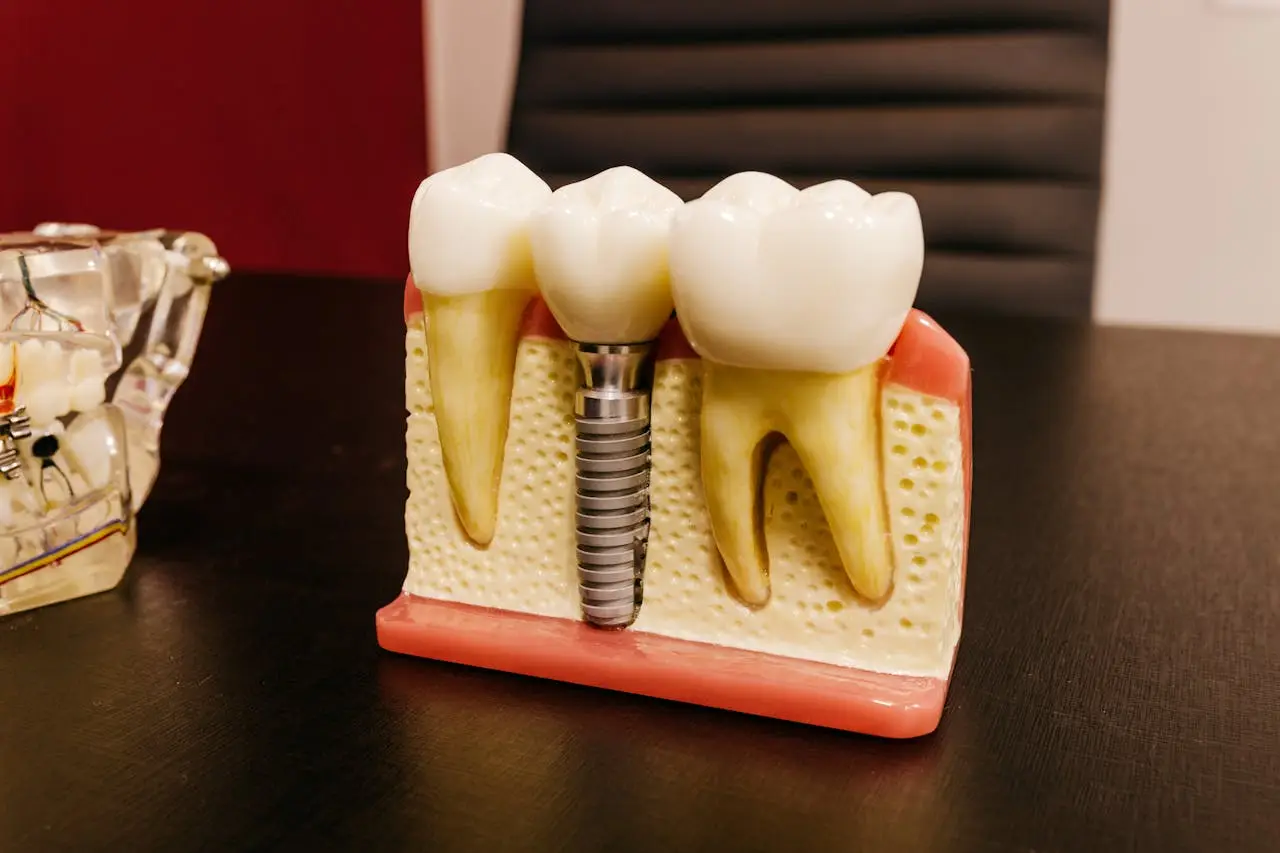
Every tooth has three layers. The outer enamel — the hard white surface you can see. The middle dentin — a slightly softer layer beneath the enamel. And at the very centre, a soft chamber called the pulp, which contains the nerve and blood supply of the tooth.
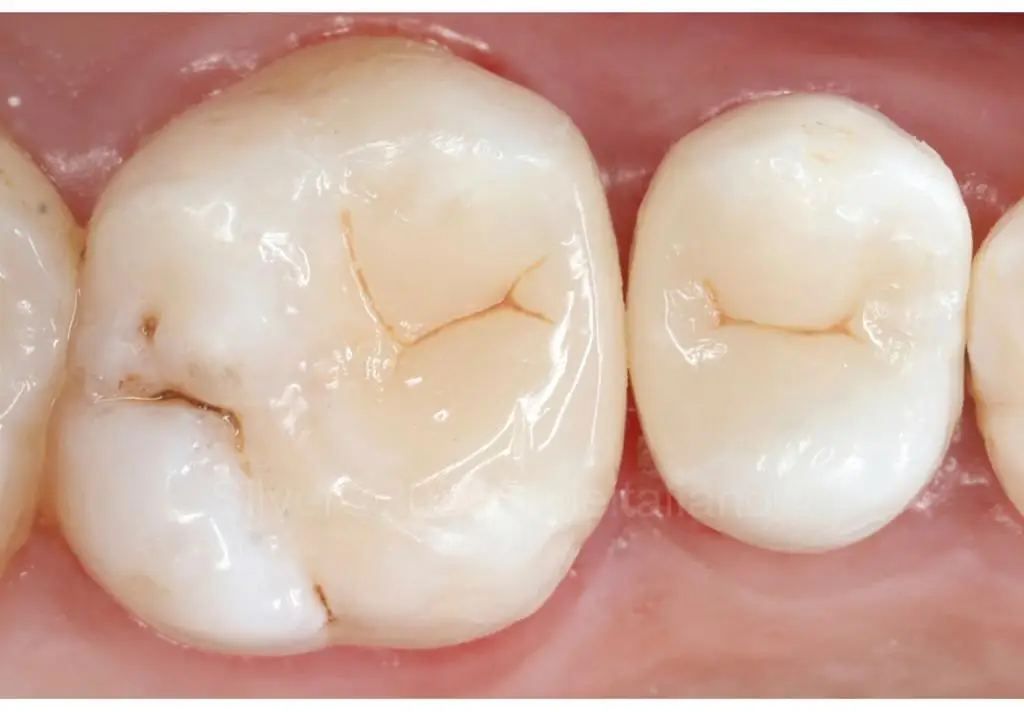
When decay, a crack, or an old failing restoration allows bacteria to reach the pulp, the nerve becomes inflamed. This condition is called pulpitis.
In the early stages, pulpitis is reversible. The tooth hurts with cold, but the pain settles within a few seconds of removing the stimulus. At this point, removing the decay and placing a filling may be enough to save the tooth without a root canal.
But if the bacterial attack continues — and it usually does when ignored — the pulp becomes irreversibly damaged. The pain now lingers for minutes after the stimulus is removed. It throbs spontaneously. It wakes you up at night. And eventually, the pulp dies.
A dead pulp does not mean the pain stops. In fact, for many patients, the pain actually intensifies because the dead tissue becomes a breeding ground for bacteria. The infection then spreads beyond the tip of the root into the surrounding bone — a condition called a periapical abscess.
This is no longer just a tooth problem. This is now a bone infection. And left untreated, it can spread.
The Signs You Should Never Ignore
Across patients in Kalyan West, Dombivli, and Thane who come to Redefine Dental Clinic — many of them share a common story. They noticed one or more of these signs weeks or sometimes months before they finally came in. And in almost every case, earlier treatment would have made the process simpler, faster, and less expensive.
Here is what your tooth is trying to tell you:
Lingering pain after hot or cold: If you drink something cold and the pain stays for more than 10–15 seconds after you’ve removed the stimulus, the pulp is irritated. See a dentist soon.
Spontaneous throbbing pain: If your tooth starts aching on its own — without any food, drink, or pressure triggering it — the pulp is likely in serious trouble. This is urgent.
Severe pain when biting or chewing: When pressure on the tooth causes sharp pain, infection may already be spreading to the tissues around the root.
Pain that wakes you at night: This is the one most people in Kalyan, Dombivli, and Thane describe when they finally come in. Nighttime pain that disrupts sleep is almost never a minor issue.
Swelling in the face, jaw, or gums: This means infection has spread beyond the tooth. Do not wait. This needs same-day attention.
A pimple-like bump on the gums near the tooth: This is a sinus tract — essentially a drainage channel your body has created to release pressure from an abscess. The tooth may actually stop hurting when this forms, which tricks patients into thinking the problem has resolved. It has not.
Discolouration of a tooth: If a tooth has slowly turned grey, yellow, or dark — it may already be non-vital (dead). It may not hurt at all. But the infection is quietly progressing.
“But My Tooth Stopped Hurting — Does That Mean It’s Fine?”
This is perhaps the most dangerous misconception in dentistry.
No. A tooth that suddenly stops hurting after severe pain is not a tooth that has healed. It is almost always a tooth whose nerve has died.
When the nerve dies, the pain signal disappears. But the infection does not disappear. It continues silently, spreading into the bone, getting larger, and weakening the surrounding structures — all without you feeling a thing.
By the time the pain returns — in the form of swelling, pressure, or a new ache — the situation is often significantly more complex than it would have been had treatment started earlier.
Many patients in Dombivli and Thane who come to Redefine Dental Clinic after a “silent phase” are surprised to see large dark shadows on their X-rays — areas of bone loss around the root tip that happened quietly, painlessly, while they assumed the problem had resolved.
If your tooth pain stopped suddenly, please see a dentist. Don’t assume you’re fine.
What Is a Root Canal Treatment — And Why Is It Not What You Fear?
Root canal treatment has a reputation that it absolutely does not deserve.
For most patients, the procedure itself is no more uncomfortable than getting a filling placed. The reason root canals used to feel painful was simple — they were often done when the tooth was already acutely infected, the anaesthesia was less predictable, and the techniques were slower.
Modern root canal treatment, especially when performed under a dental operating microscope, is precise, efficient, and well within comfortable limits for the vast majority of patients.
Here is what actually happens during a root canal:
The tooth is completely numbed using local anaesthesia. A rubber dam — a small sheet of latex or non-latex material — is placed around the tooth to isolate it completely from the rest of the mouth. This keeps the working area sterile and free from saliva contamination.
The dentist then makes a small opening in the crown of the tooth to access the pulp chamber. Microscopic instruments called files are used to carefully clean and shape the canals inside the roots. These canals are then disinfected with solutions that eliminate bacteria. Finally, the canals are sealed with a biocompatible material called gutta-percha, and the tooth is sealed and eventually restored with a crown.
From beginning to end, most root canals at Redefine Dental Clinic take one to two appointments depending on the complexity of the case.
Why Does the Microscope Make a Difference?
The canals inside a tooth are not simple straight tubes. They branch, curve, divide, and sometimes narrow down to dimensions smaller than a human hair.
Without magnification, these complexities are invisible. Canals get missed. Bifurcations go untreated. Bacteria survive in pockets that conventional instruments can’t reach. This is one of the most common reasons root canal treatments fail.
A Dental Operating Microscope — the kind used at Redefine Dental Clinic in Kalyan West — provides up to 26x magnification with bright coaxial illumination. This means the entire canal system is visible in extraordinary detail. Nothing is left to estimation.
For patients in Kalyan, Dombivli, and Thane who have been told that a previous root canal has failed, or who have a complex tooth that needs retreatment — microscope-assisted endodontics offers a level of precision that simply is not possible otherwise.
When Is It an Emergency? A Simple Framework
Here is a straightforward way to assess your situation:
See a dentist within 24 hours if:
- Pain is severe and not responding to over-the-counter painkillers
- You have any visible swelling on your face, jaw, or neck
- You have difficulty swallowing or opening your mouth
- You have a fever along with tooth pain
See a dentist within 2–3 days if:
- Pain wakes you up at night
- You have a spontaneous throbbing ache
- Pain lingers for more than 15 seconds after a hot or cold stimulus
- You notice a gum pimple or discharge near the tooth
Schedule a routine appointment if:
- You have mild sensitivity to cold that resolves quickly
- You notice a tooth changing colour
- A tooth that was previously painful has suddenly stopped hurting
What Happens If You Keep Postponing?
This is an honest conversation worth having.
Dental infections do not plateau. They progress. The longer treatment is delayed, the more bone is lost around the root. What could have been a straightforward root canal can become a root canal with surgical component. What could have been saved can sometimes reach a point where extraction is the only option.
And when a tooth is lost, the problems don’t end — they begin. Neighbouring teeth shift, biting forces change, the jawbone begins to resorb, and the cost and complexity of restoring function increases significantly.
Across our patients in Kalyan West, Dombivli, and Thane, the ones who come in early go home with their teeth intact, their pain resolved, and their treatment completed in one or two visits. The ones who wait — through fear, through busy schedules, through the hope that it will get better on its own — often face more complex, more costly, and more time-consuming treatment.
The tooth you save with a single early root canal is the tooth you keep for life.
Frequently Asked Questions
Can I take painkillers and wait it out? Painkillers manage the symptom. They do not treat the infection. Taking pain medication and delaying treatment allows the infection to grow while masking the signal your body is sending you.
Will the root canal hurt? With proper anaesthesia and modern technique, the procedure itself is typically painless. Some sensitivity for a day or two after treatment is normal. Severe infection before treatment can make anaesthesia slightly less predictable, which is another reason earlier treatment is better.
How long does a root canal take? At Redefine Dental Clinic, most root canals are completed in one to two appointments of 60–90 minutes each, depending on the complexity of the tooth and canal anatomy.
Do I need a crown after a root canal? In most cases, yes. A tooth that has undergone root canal treatment becomes more brittle over time. A crown protects the tooth from fracture and restores full biting function.
What is the success rate of root canal treatment? With microscope-assisted technique, rubber dam isolation, and bioceramic sealers, root canal success rates are above 95% in the hands of a specialist endodontist.
Can a root canal be done in one sitting? Many straightforward cases can be completed in a single visit. More complex cases — severely curved canals, retreatment cases, teeth with active infection — may require two visits for the best outcome.
You Don’t Have to Make That 2 AM Decision Alone
If you’re reading this because your tooth is hurting right now — know that what you’re experiencing is real, it matters, and it can be treated.
Redefine Dental Clinic in Kalyan West serves patients from across Kalyan, Dombivli, Thane, Ambernath, and the surrounding areas. Every root canal is performed under the Dental Operating Microscope, with rubber dam isolation as standard, and with bioceramic sealers that offer superior long-term sealing and biocompatibility.
You don’t need to lose your tooth. You don’t need to be in pain. And you don’t need to be afraid.
You just need to come in.
Dr. Gautam Shetty is an MDS Endodontist and founder of Redefine Dental Clinic, Kalyan West. With over 10,000 root canal treatments performed under the dental operating microscope, he specialises in complex, retreatment, and microscope-assisted endodontic cases.
📍 Redefine Dental Clinic — Zojwala Complex, Sahajanand Chowk, Agra Road, Kalyan West, Maharashtra 🌐 redefinedentalclinic.com