Do You Really Need a Crown After a Root Canal? What Modern Dentistry Actually Says
Quick answer: Not always. For decades, the default treatment after a root canal has been a post and full coverage crown. Modern evidence shows that whether your tooth needs a crown depends far more on how much healthy structure is left than on the root canal itself. Some teeth genuinely need crowns. Many don’t. Here’s how to tell the difference.
If you’ve recently had a root canal, or your dentist has told you that you will need one, there’s a good chance you’ve also been told you need a crown to follow.
It’s such a routine recommendation that most patients don’t think to ask why. The procedure has been packaged as a single treatment plan for as long as anyone can remember. Drill the canal, fill it, top it with a crown.
What if the science has moved on from that automatic pairing?
Modern restorative dentistry now recognises something the older textbooks underplayed. Whether your tooth survives long term doesn’t actually depend on the root canal itself. It depends on how much healthy tooth structure is still standing after the decay, fracture, or trauma that brought you to the dentist in the first place.
This shift has a name. Biomimetic dentistry. And it’s quietly changing how thoughtful clinicians think about post-root-canal care.
The old rule, and why it’s outdated
For most of the last fifty years, dental schools taught a binary. Endodontically treated tooth equals post and crown. The reasoning was that root-filled teeth become brittle without their pulp, and that the only safe way to protect them was full coverage.
Decades of clinical research have complicated that picture.
Studies have repeatedly shown that the loss of vitality alone has a relatively minor effect on tooth strength. What dramatically reduces strength is the loss of healthy tooth tissue, which has often already happened by the time someone needs a root canal in the first place.
Two numbers from biomechanical research illustrate the point.
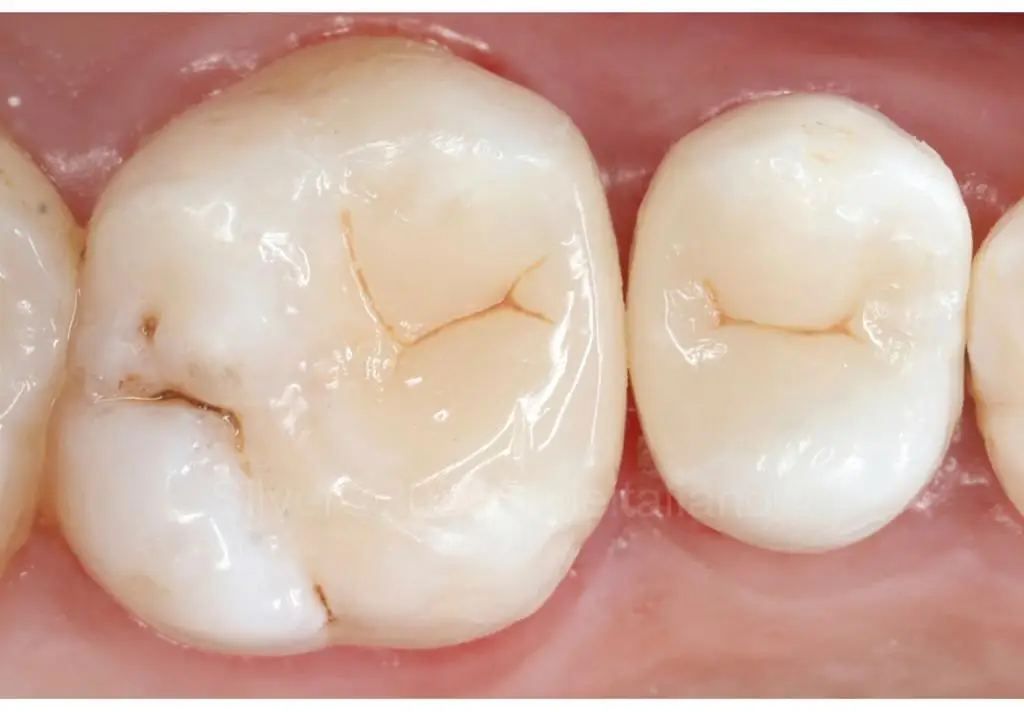
A tooth that loses only its small access cavity, the opening the dentist makes to reach the canal, loses about 5 percent of its cuspal stiffness. That’s a minor structural change.
A tooth that loses a marginal ridge, often the case when there’s been significant decay or a fracture, loses about 46 percent.
Same procedure underneath. Wildly different teeth. Wildly different treatment plans should follow.
The ferrule: the most important measurement most patients have never heard of
If you walk away from this post remembering one new word, make it ferrule.
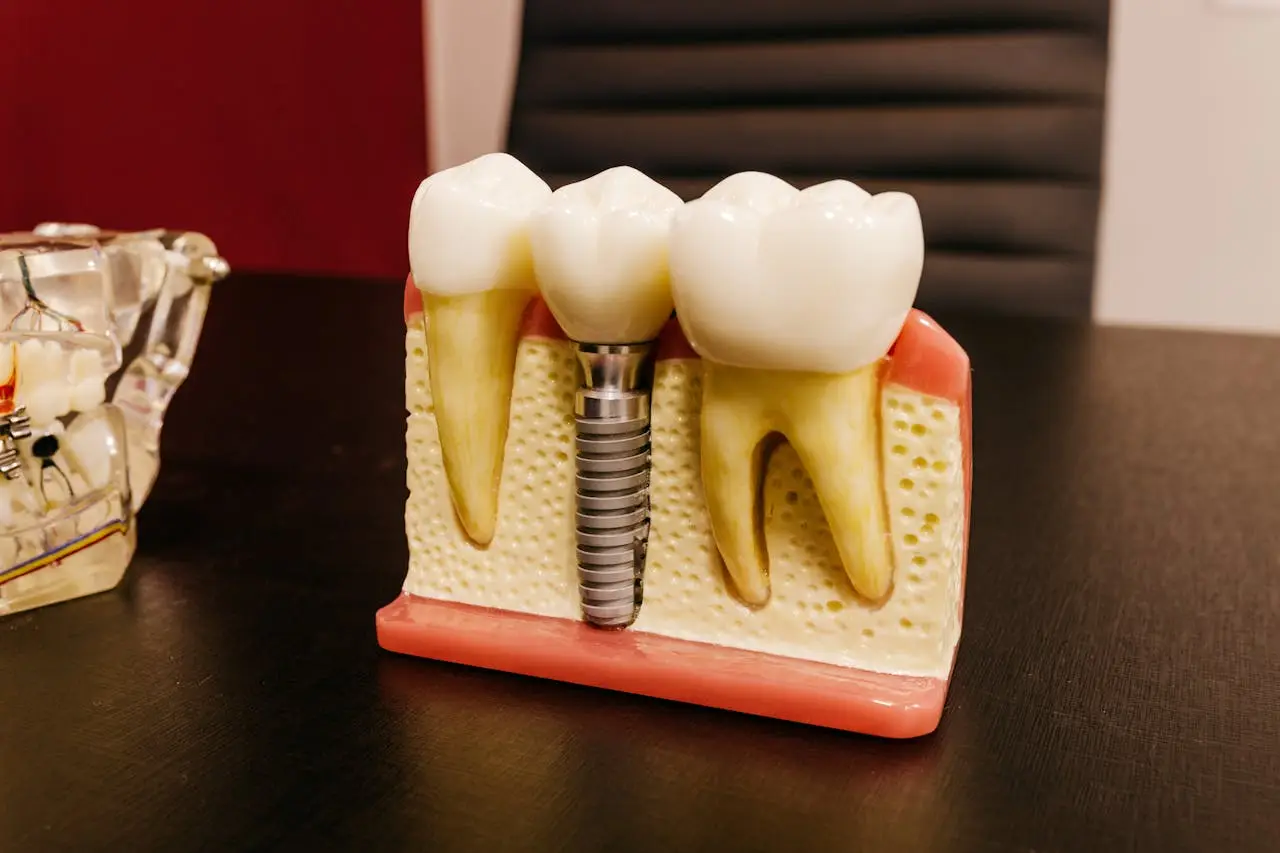
The ferrule is a 1.5 to 2mm band of healthy dentin that wraps the base of your tooth like a collar, just above the gum line. It’s what gives a restoration something to grip onto. It distributes biting forces. It is the single strongest predictor of whether your restored tooth holds up over the long term.
If your ferrule is at or above 1.5mm, conservative restorations have excellent fatigue resistance. Composites bond well, onlays seat properly, and even crowns last longer because they have a stable foundation.
If your ferrule is under 1.5mm, the picture changes. No post, no crown, no high-end material can fully compensate for the lack of healthy structure to anchor against. In those cases, your dentist should be talking to you about crown lengthening or orthodontic extrusion before placing a post.
A good consultation will involve someone actually showing you what your ferrule looks like on imaging. If that part of the conversation is missing, it’s worth asking.
What actually decides your treatment plan
The most current research suggests a decision framework that depends on three things. Which tooth, how many walls of the tooth are still intact, and whether you grind your teeth.
For front teeth (incisors and canines) with 3 or 4 walls of healthy structure intact, well-conducted studies including Sorensen and Martinoff have shown no significant survival difference between teeth restored with a direct bonded composite and teeth that received a crown. If the tooth has lost most of its structure, the picture changes and a post with crown becomes more appropriate.
For back teeth (premolars and molars) with 3 or 4 walls intact, research by Mannocci and colleagues found no difference in three-year survival between teeth restored with composite or bonded onlays and teeth restored with crowns. When fewer than 2 walls remain, full coverage starts to earn its place. The tooth simply doesn’t have enough structure left to resist chewing forces without it.
If you grind your teeth (bruxism), the calculation shifts. A 2025 randomised controlled trial showed that bruxism increases the risk of restoration failure by roughly 12.8 times. In those cases, cuspal coverage through a crown or endocrown is the safer bet regardless of how many walls are intact.
Modern alternatives that didn’t exist when the old rule was written
The treatment menu in 2026 looks very different from the menu in 2005.
Endocrowns are a single-piece restoration anchored directly into the pulp chamber, eliminating the need for a separate post. Five-year survival rates around 91 percent put them squarely in competitive territory with traditional crowns, often with less healthy tissue removed in the preparation.
Bonded onlays in modern ceramics like lithium disilicate offer partial coverage that protects the cusps without sacrificing the entire crown of the tooth.
Glass fibre posts are a meaningful step forward from older metal posts. Research shows glass fibre posts are about 4.5 times safer than metal posts when measured by catastrophic root fracture risk. Their elastic modulus is closer to natural dentin, which means they flex with the tooth instead of acting as a rigid wedge that can split it.
The biomimetic philosophy underlying these alternatives is straightforward. The closer a restoration’s mechanical properties are to natural tooth structure, the more uniformly stress is distributed, and the longer everything tends to last.
Why the old default is still the default
If the evidence has shifted, why does the post-and-crown reflex persist?
There are a few honest reasons.
Some are educational. Dentists trained more than a decade ago were taught the binary as a rule, and clinical habits don’t change as quickly as research does. Continuing education in biomimetic approaches isn’t yet standard everywhere.
Others are structural. Qualitative research has documented that dentists in some practice settings report pressure to default to more invasive treatment plans. Crowns also reimburse at several multiples of direct composites in many systems, which creates an incentive that runs in the wrong direction. Dentists with formal biomimetic training are statistically more likely to choose conservative partial coverage when it’s clinically appropriate, suggesting the gap is partly one of training and incentives rather than clinical disagreement.
None of this means your dentist is recommending a crown for the wrong reasons. Many crowns are clinically necessary. But it does mean the conversation about whether you need one is worth having out loud.
Three questions worth asking at your next consultation
If you’re heading into a discussion about post-root-canal restoration, these three questions will tell you a lot about both your tooth and the clinical thinking behind your treatment plan.
1. How many walls of my tooth are still intact? This is the single most important variable in deciding whether full coverage is needed. A tooth with 3 or 4 walls is in a very different clinical situation than a tooth with 1 or 2.
2. What does my ferrule look like? You’re asking your dentist to actually measure or estimate the band of healthy dentin around your tooth. If it’s under 1.5mm, the conversation should include crown lengthening or extrusion before any post is placed.
3. What’s the most conservative option that still protects my tooth? A good clinician will walk you through the realistic options, from direct composite at the most conservative end to a full crown at the most invasive, and explain which one suits your specific tooth.
The right dentist won’t be defensive about these questions. They will appreciate them. The patients who ask informed questions are also the ones who follow up with good home care, return for reviews, and protect the work that’s been done.
The bottom line
Some teeth do need crowns after a root canal. If you’ve lost most of the tooth structure, if your ferrule is compromised, if you grind your teeth, full coverage is often the right answer.
But many teeth don’t.
The right question isn’t “do root canal teeth need crowns.” It’s “what does this particular tooth need, given what’s actually left of it.” That’s a question your dentist should be able to answer in plain language, with imaging, and with reference to the evidence.
If you’re considering a root canal restoration and want a second opinion that walks you through the modern decision framework, the team at Redefine Dental Clinic is happy to help. We treat each tooth as its own case, not as a procedure code.
Have a question about an upcoming root canal or restoration? Book a consultation with Dr. Gautam Shetty at Redefine Dental Clinic, Kalyan West.