The honest, no-nonsense guide to clear aligners in India — why cheap is rarely cheap, and how to make the smartest decision for your smile, your health, and your wallet.
Walk into any dental clinic in India today and there’s a very good chance you’ll see a poster, a brochure, or a screen displaying some version of the same promise: a beautiful, straight smile — without braces, without discomfort, without anyone knowing. Clear aligners have genuinely changed orthodontic treatment across the world, and India is now one of the fastest-growing markets for them. But here’s the thing nobody’s brochure will tell you: not all aligners are the same. Not even close. The market today is f loaded with brands ranging from internationally certified, clinically validated systems to budget knockoffs that look identical in photos but perform in entirely different ways inside your mouth. And the difference between choosing the right one and the wrong one isn’t just about how fast your teeth move — it’s about your bone health, your bite, your long-term oral function, and ultimately, how much money you actually spend over the course of your life. In this guide, I want to have an honest, patient-first conversation about clear aligners. Not a sales pitch. Not a brand endorsement for commission. Just the clinical truth — from someone who has spent 18 years treating complex dental cases with microscope precision and has seen what happens when patients cut corners on orthodontic treatment.
50+ Aligner brands now available in India………….. ₹80K+ Cost of correcting failed aligner………… 3x Growth of India’s aligner market in 5 years……………… 18 Yrs Dr. Shetty’s clinical experience treatment
The Clear Aligner Revolution — A Quick Story
Clear aligners were invented in the late 1990s by two Stanford University students — Zia Chishti and Kelsey Wirth — who were frustrated with the discomfort and aesthetics of traditional braces. Their company, Align Technology, launched a product called Invisalign in 1999. It was the world’s first commercially available clear aligner system, backed by rigorous clinical research, FDA approval, and years of controlled trials. The concept was revolutionary: custom-made, transparent, removable trays that move teeth gradually through a series of pre-planned steps. No metal. No wires. No awkward tightening appointments. No food restrictions. And — critically — no one could tell you were wearing them. Invisalign’s success opened the floodgates. By the 2010s, dozens of companies around the world were manufacturing clear aligners. Some invested in proper research and clinical validation. Others simply reverse-engineered the physical product — making thin plastic trays that looked almost identical on the outside — and entered the market at dramatically lower price points. Today, in 2025, a patient sitting in my clinic in Kalyan West could choose from over 50 different aligner brands. Some cost ₹25,000. Some cost ₹4,00,000. And everything in between. The question every patient — including you — deserves an honest answer to is: Does the difference in price reflect a difference in quality? And if so, how do I know which is which? Let’s answer that together.
How Clear Aligners Actually Work — The Science You Need to Know.
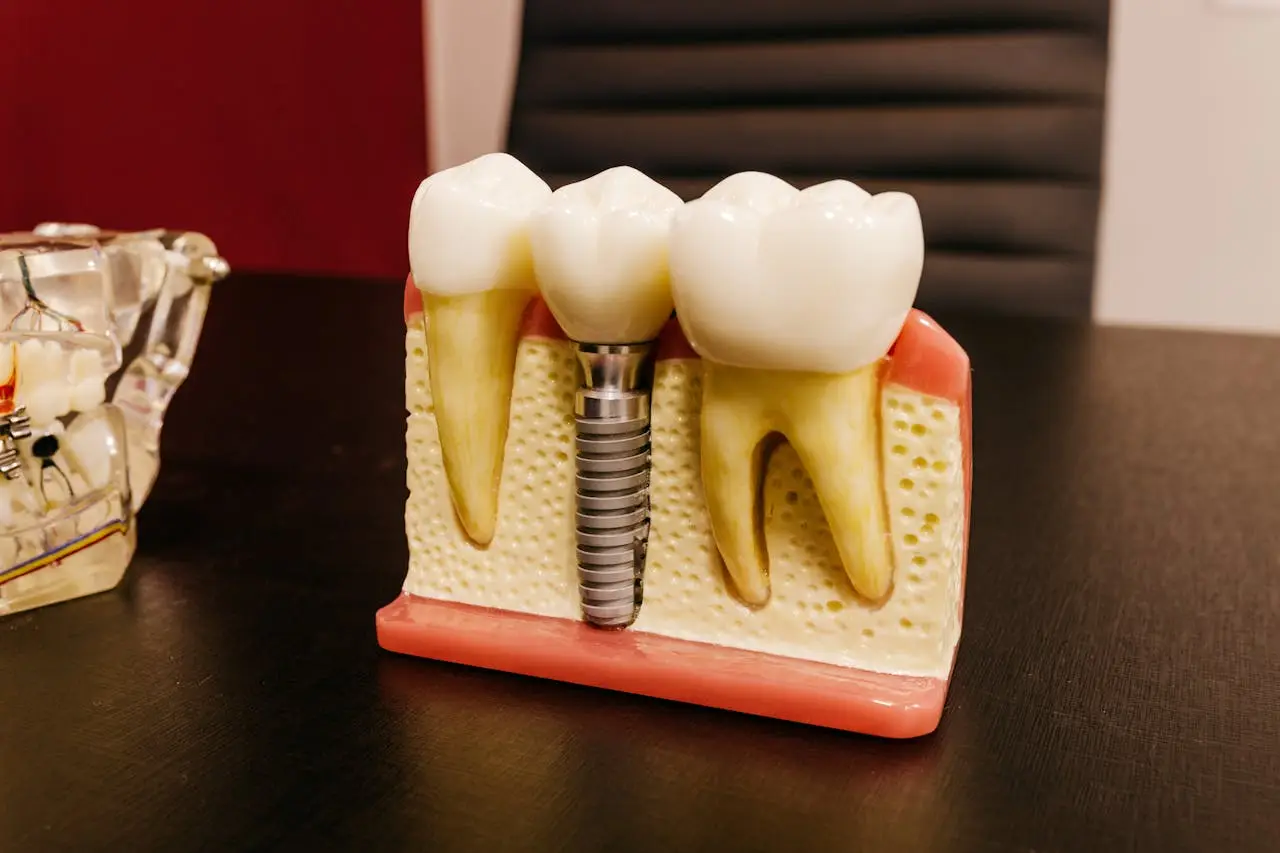
Before we compare brands, you need to understand what aligners are actually doing inside your mouth. Because once you understand the biology, you’ll never look at a “cheap aligner deal” the same way again. When a clear aligner exerts pressure on a tooth, it doesn’t simply push the tooth sideways like pushing a peg into wood. What actually happens is a complex biological cascade involving your periodontal ligament (the soft tissue connecting tooth to bone), your jawbone cells (osteoblasts and osteoclasts), and your body’s immune response. Here’s the simplified version: pressure causes the bone on one side of the tooth to slowly resorb (dissolve away) while new bone forms on the other side. The tooth “moves” because your bone is actively rebuilding around it. This process takes weeks per movement and requires very specific, calibrated force levels to work safely. If the force is too much — which happens frequently with poorly engineered aligners — you risk: Root resorption: The roots of your teeth literally shorten. This is sometimes permanent. Bone loss: Rushed movement without proper bone remodelling time creates thin bone around teeth. Relapse: Teeth moved too quickly often spring back because the bone didn’t have time to consolidate. Bite problems: Misaligned bite (malocclusion) that causes jaw pain, headaches, and uneven tooth wear. Gum recession: Teeth moved outside the bone envelope can cause gums to pull away. Reputable aligner systems manage this through sophisticated 3D treatment planning software, patented materials science, regular monitoring protocols, and clinical research that has been validated over thousands of cases. This is not something a ₹25,000 aligner brand can replicate.
The Key Insight
Clear aligners are a medical device that physically reshapes living bone. The engineering precision behind them matters enormously — not for cosmetic reasons, but for the biological safety of your teeth, roots, and jawbone.
The Aligner Market in India: Who Are the Players?
Let me walk you through the major categories of aligner brands available in India today — and what you actually need to know about each of them .
Category 1: The Gold Standard — USA-Origin, Clinically Validated Brands
Invisalign USA — ALIGN TECHNOLOGY, FDA APPROVED The original. Over 14 million patients treated globally. Backed by 25+ years of clinical research, proprietary SmartTrack material, and the most advanced AI-driven treatment planning software (ClinCheck) in the world.
✓ Largest clinical dataset in the world
✓ FDA cleared, CE marked, globally validated
✓ Can treat complex cases (not just mild crowding)
✓ SmartTrack material delivers consistent, gentle force
✗ Highest cost in market (₹1.5L–₹4L in India) Gold Standard — Best for complex cases.
3M Clarity Aligners USA — 3M ORAL CARE, FDA APPROVED 3M’s entry into clear aligners brings the company’s materials science heritage. Known for excellent material quality and good predictability. Often prescribed by orthodontists for moderate-to-complex cases. ✓ Exceptional material quality from 3M
✓ Strong orthodontist network in India
✓ FDA approved, clinically researched
◑ Less brand awareness than Invisalign Excellent
— Strong USA clinical backing.
Category 2: Reputable International & Indian Premium Brands.
Toothsi (makeO) INDIA — PREMIUM SEGMENT One of the better-known Indian aligner brands, with home scanning kits and a hybrid tele-dentistry model. Quality has improved significantly in recent years, but their at-home model limits in cases.
person clinical oversight
a real concern for moderate-to-complex
✓ Better QC than many Indian competitors
✓ Convenient home scanning
✗ Limited in-person oversight
✗ Not ideal for complex cases
X Good for mild cases only — with caution
Illusion Aligners INDIA — MID-PREMIUM
A clinic-based Indian brand that has gained traction with dental professionals. Decent quality for mild-to-moderate cases when supervised by an experienced orthodontist or dental specialist. The key is the clinician — not just the brand.
✓ Clinic-administered (better oversight) ✓ More affordable than international brands ◑ Quality varies by manufacturing batch ✗ Limited independent clinical research Acceptable for mild cases — needs strong clinician
Angel Align CHINA — INTERNATIONAL PRESENCE
A large Chinese manufacturer with a growing presence in India. Has CE certification and is used in several countries. Material quality and treatment planning are reasonable, but the clinical research base is far smaller than USA-origin brands. ✓ CE certified,
used globally
✓ Mid-range pricing
✗ Limited peer-reviewed clinical data
✗ Less predictable for complex cases
Moderate — case selection is critical
This Is Where Serious Problems Happen There are dozens of aligner brands operating in India — sold online, through WhatsApp agents, or at heavily discounted prices in certain clinics — that have no meaningful clinical research, no regulatory approval, no quality control standards, and no accountability. These are the brands that are generating a growing number of “failed aligner” cases requiring expensive corrective treatment.
These brands typically share these characteristics: No FDA, CE, or BIS certification visible Pricing that seems unbelievably low (₹15,000–₹35,000 for a “full treatment”) Heavy reliance on influencer marketing and before/after photo testimonials with no clinical data No clear treatment planning process or specialist involvement Vague or no warranty/guarantee terms Customer service that disappears once payment is made.
The Real Cost of “Cheap” Aligners — A Story from My Clinic.
Let me tell you about a patient I saw — let’s call her Priya, a 27-year-old working professional from Kalyan. She came to me about eight months after completing a “budget aligner treatment” she had purchased online for ₹28,000. It had ₹15K ₹35K seemed like a great deal at the time. Her teeth looked straighter. But she was now experiencing persistent jaw pain, food stuck in her gums more than before, and two of her teeth felt “loose.” When I examined her under the dental microscope, here’s what I found: Significant root resorption on her upper front teeth — permanent shortening of the roots due to excessive, uncontrolled force Early-stage gum recession on three teeth that had been moved beyond the bone envelope A bite that had shifted — her upper and lower teeth were no longer meeting correctly Bone loss in two areas that had not been monitored during treatment The corrective treatment plan we had to build — combining periodontal treatment, bite correction, and protective bonding — cost her over ₹95,000. She also needed more traditional orthodontic intervention to stabilize what the aligners had destabilized. Her total spend? Over ₹1,23,000. For a treatment that started because she wanted to save money. “Cheap treatment is never actually cheap. Its just expensive payment deferred to a later, more painful date.
Priya’s story is not unique. I see versions of it with increasing frequency as more people self-diagnose their dental needs and purchase treatments online or from unqualified providers. The saddest part? The original ₹28,000 treatment was not saving her money. It was scheduling her for a far more expensive future. Root resorption caused by poorly engineered aligners is often irreversible. Short roots are permanently weakened roots. Once bone is lost around a tooth due to improper force, recovery is partial at best. The damage done by a bad aligner treatment can affect your teeth for the rest of your life — long after the aligners are gone
Why USA-Origin Aligners Specifically Deserve Your Attention
You might wonder: why does the country of origin of an aligner brand matter? Aren’t plastics just plastics? The answer is no — and here’s why in plain language. 1. Regulatory Oversight The United States Food and Drug Administration (FDA) is one of the world’s most rigorous medical device regulatory bodies. When a clear aligner system receives FDA clearance, it means the manufacturer has submitted clinical data, manufacturing process documentation, safety testing results, and biocompatibility studies — all of which are reviewed and approved by independent scientists and clinicians. This is not a rubber stamp. Align Technology (Invisalign) and 3M (Clarity Aligners) and Ormco (Spark) have all gone through this process. It adds cost to their product — but it also means you’re getting a device that has been independently verified to be safe for use inside a human body. Indian-manufactured aligners and Chinese-manufactured aligners are often sold without equivalent regulatory clearance. Some have CE marks (European certification), which is meaningful but less comprehensive than FDA clearance for complex orthodontic devices. Many have no significant certification at all. 2. Material Science — What the Aligner is Actually Made of Matters Invisalign uses a proprietary thermoplastic polyurethane material called SmartTrack — the result of over five years of dedicated material science research by Align Technology. This material was specifically engineered to: Apply consistent, gentle, biologically appropriate force across the surface of each tooth Retain its shape and force properties over the full two-week wear period Resist staining and maintain clarity Be biocompatible — meaning it does not leach harmful chemicals into your saliva or tissues over long-term wear Generic or budget aligner materials are typically standard thermoplastics — sometimes similar to those used in mouthguards or food containers — without the specialised engineering for controlled force delivery. Over a 14-day wear period, they may lose their force properties within days, meaning teeth receive inadequate movement in the later half of wear. This leads to poor treatment outcomes and increased treatment duration. 3. Treatment Planning Software and Clinical Intelligence Premium aligner systems, particularly Invisalign, use sophisticated AI-powered 3D treatment planning platforms (ClinCheck for Invisalign) that have been trained on millions of real-world treatment outcomes. Your clinician uses this software to virtually simulate every stage of your tooth movement before a single aligner is made. This means the entire treatment is engineered as a system — with each tray specifically calculated to move specific teeth by specific amounts in specific directions, while accounting for your unique anatomy, bone density, and root morphology. Budget brands either use simplified planning tools with less clinical intelligence, or in the worst cases, use generic “average” tray templates that are not customised to your actual anatomy at all. This is like getting a prescription medication in a standard dose without any consideration for your body weight, age, or specific condition. 4. The Importance of In-Person Clinical Supervision Here’s something the “get your aligners delivered to your door” marketing doesn’t advertise: the clinical supervision of your treatment by a trained dental specialist is arguably more important than the brand of aligner itself. An experienced clinician monitors your progress at regular intervals, watching for signs of root resorption, checking bite changes, confirming teeth are tracking correctly within the aligners, and making corrections when needed. Online and direct-to-consumer aligner models bypass this — and the absence of oversight is where problems happen.
I always tell my patients: a premium aligner in the hands of an inexperienced clinician can still produce a poor result. And the best clinician cannot fully compensate for a poorly engineered aligner. You need both — a quality validated system AND experienced in-person supervision. When these two things align (pun intended), the results are extraordinary and lasting
How to Choose the Right Aligner: Your Complete Checklist
Whether you’re considering aligners for the first time or reconsidering after a previous treatment, here is a practical, clinician-designed checklist to help you make the right decision. 1 2 3 Start with an in-person specialist consultation — always No aligner system should be prescribed without a clinical examination. You need X-rays (at minimum OPG), photographs, and ideally a 3D scan of your teeth and bone structure. Anyone offering you aligners without this is cutting corners that will cost you. Ask specifically which brand will be used and why Your clinician should be able to explain why they are recommending a specific brand for your specific case. “It’s affordable” is not a clinical reason. “Your case involves moderate crowding with root proximity, which requires controlled force delivery — which is why I recommend Invisalign” is a clinical reason. Verify FDA or CE certification — and ask for it in writing Any reputable aligner brand will have publicly available regulatory certifications. If your clinic cannot produce this information or becomes evasive, that is a serious red flag. 4 Ask about the treatment planning process Will you be shown a 3D simulation of your expected tooth movement before treatment begins? Reputable systems like Invisalign allow patients to see their full ClinCheck treatment plan — a virtual animation of every stage of movement — before committing. This is both clinically important and a powerful way to verify the quality of planning. 5 6 Understand the monitoring protocol How often will you be seen in clinic? What happens if your teeth aren’t tracking correctly? What is the protocol for mid-course corrections? A credible clinic will have clear, documented answers to all of these questions. Ask about retainers — the treatment doesn’t end when aligners end Post-treatment retention is critical to maintaining your results. Teeth have memory and will attempt to return to their original positions if not properly retained. A quality treatment plan includes a clear retainer protocol — usually nighttime retainer wear for life. 7 Don’t make the final decision based on price alone Price is one factor among many. If the lowest-priced option has no regulatory certification, no specialist supervision, and a unclear treatment planning process — it is not a good deal regardless of the number. Use the full checklist.
The Seven Red Flags
Walk Away If You See Any of These No in-person clinical examination before treatment is prescribed. Any brand or clinic offering aligners purely online or through WhatsApp without physical examination is operating outside safe clinical practice. Pricing that seems dramatically lower than the market without explanation. ₹20,000 for a “complete aligner treatment” is not a deal — it’s a red flag. Find out exactly what that price includes and what it excludes. No mention of the brand or manufacturer of the aligners being used. Transparency is a baseline expectation. If a clinic is vague about which aligners they use, ask yourself why. Marketing based primarily on influencer testimonials with no clinical credentials or data. A beautiful smile in an Instagram photo tells you nothing about the root health, bone status, or bite function of the patient six months later. Guarantees that seem too absolute. “Guaranteed results in 6 months” sounds good. But aligner treatment duration depends on your specific biology, case complexity, and compliance — no ethical clinician can guarantee a blanket timeframe for everyone. No discussion of what happens if things go wrong. What is the protocol if your teeth aren’t tracking correctly? What if you need additional trays? What is the complaint and correction process? These questions should have clear answers before you sign anything. Pressure tactics or time-limited offers. “This price is only valid today” is a sales tactic, not a clinical recommendation. Dental treatment decisions should never be rushed.
Are You Even a Candidate for Clear Aligners?
This is a question many aligner brands conveniently avoid raising — because the honest answer is that clear aligners are not suitable for every orthodontic case. Aligners work beautifully for mild-to-moderate cases of: Crowding (teeth overlapping or out of alignment) Spacing (gaps between teeth) Minor overbites and underbites Mild crossbites Relapse cases (teeth that have shifted after previous treatment) However, there are cases where traditional orthodontic treatment — braces, or even orthognathic (jaw) surgery — may be medically necessary. These include: Severe skeletal malocclusions (jaw bone misalignment) Severely rotated teeth requiring torque control beyond aligner capability Cases with significant bone loss (periodontal disease) Patients who cannot commit to 22-hour daily wear (aligners must be worn consistently to work) Patients with active decay or gum disease that must be treated first Premium aligner systems like Invisalign have expanded their clinical range significantly — Invisalign now treats many cases that were previously considered “braces only.” But even then, proper diagnosis is essential. A qualified specialist will tell you clearly whether aligners are right for you — and if so, which system.
The Honest Truth
If a provider tells every single patient that aligners are perfect for them — without detailed case assessment — they’re prioritizing sales over clinical integrity. The right specialist sometimes says “Actually, for your specific situation, traditional braces will give you a better result.” That’s not bad news. That’s good dentistry.
Money Should Not Be the Primary Factor — And Here’s the Math I understand that cost is a real consideration for most families. I’m not dismissing that. But I want to help you do the full-cost calculation — not just the upfront number
The True Cost Calculation of Cheap Aligners
Scenario Upfront Cost Corrective Treatment:
Unknown brand, no oversight ₹20,000 ₹35,000 ₹80,000 ₹1,50,000
High (multiple corrective visits) ₹1,00,000 ₹1,85,000+
When you factor in the corrective cost of failed treatment, the health cost of permanent root or bone damage, and the emotional cost of prolonged dental suffering — the premium aligner investment frequently ends up being the less expensive option in absolute terms. There’s also a dimension that doesn’t fit in a table: the confidence cost. Poorly treated orthodontic cases often result in smiles that are partially improved — crooked enough to notice, straightened enough to feel like something “went wrong.The psychological impact of a treatment that delivers mediocre results after months of effort and investment is real and significant.
“A smile is a lifelong investment. e decision you make at the beginning of treatment echoes in every photograph, every meeting, every moment of confidence — for decades.
The Compliance Factor — Your Role in the Success of Your Treatment.
Here’s a truth that even the best aligner brands cannot control: your results depend partly on you. Clear aligners must be worn for a minimum of 20–22 hours per day to deliver the planned tooth movement. They should only be removed for eating, drinking (anything other than plain water), and brushing. This sounds simple — but over the course of 12–24 months of treatment, compliance becomes genuinely challenging. Patients who remove their aligners frequently, leave them out for hours, or skip wearing them during sleep will experience: Slower tooth movement than planned Teeth that don’t track correctly within the aligner shape Need for additional trays (refinements), extending treatment duration In some cases, complete regression of movement already achieved Premium aligner systems account for this with compliance indicators (Invisalign uses small blue compliance dots that fade with wear), monitoring protocols, and mid-course correction capabilities. But no technology can substitute for patient commitment. Before you invest in any aligner treatment, honestly assess: Can I commit to wearing aligners for 22 hours every single day for 12–18 months? Am I willing to brush and floss after every meal before reinserting aligners? Do I have upcoming events (weddings, long travel, surgeries) that might disrupt compliance? Do I have the discipline to keep appointments and report issues promptly? If the honest answer to any of these is uncertain, discuss it openly with your clinician. A good specialist would rather design a treatment plan that accounts for real-world compliance than promise perfect results that depend on ideal-world behaviour.
What Makes a Specialist Different from a General Dentist for Aligner Treatment?
Clear aligners are increasingly being offered by general dentists, and in many cases this is perfectly appropriate — especially for mild, straightforward cases. But there are important distinctions that patients deserve to understand before choosing their treatment provider. General Dentist Completed undergraduate BDS (5 years) plus internship Has foundational knowledge of orthodontics but not specialist-level training Suitable for mild cases of crowding or spacing May have limited training in complex force mechanics, root monitoring, or bite biomechanics Dental Specialist (MDS / Post-Graduate Qualified) Completed an additional 3-year Masters-level specialisation after BDS Deep training in the specific discipline of their specialty Better equipped to detect complications early (root resorption, bone changes, bite shifts) More experienced with managing complex cases and mid-course corrections Microscopic Dentist (Additional Precision Layer) At Redefine Dental Clinic, I approach every case with the precision mindset that comes from practicing Microscopic Dentistry — using high magnification (up to 25x) for clinical examinations and procedures. While the dental microscope itself is not used for every routine aligner check-up, the precision thinking that it trains — looking closely, checking carefully, never assuming — shapes how I evaluate every patient’s progress. In practical terms, this means I catch early signs of root resorption, gum changes, and bone shifts that might not be visible to the naked eye at a standard check-up distance. Early detection means early intervention, which means better outcomes and lower total treatment cost.
My philosophy is simple: every patient who sits in this chair deserves the same level of precision and attention that I would give to a family member. That means recommending the right aligner brand for their specific case — even if it costs more. And it means never recommending a treatment I don’t believe in because of a margin incentive. Your trust is worth more than any commission.
Why Patients Choose Redefine Dental Clinic for Aligner Treatment in Kalyan
At Redefine Dental Clinic, we don’t approach aligner treatment as a product to sell. We approach it as a clinical outcome to engineer — with precision, honesty, and a genuine commitment to your long-term dental health. Here is what you can expect when you come to us for an aligner consultation: 1 2 3 A genuinely thorough clinical examination We use dental radiographs, clinical photographs, and in appropriate cases, 3D dental scans to understand your complete oral anatomy before any treatment recommendation is made. An honest case assessment — including if aligners are NOT right for you Not every case is suited for clear aligners. We will tell you plainly if your case needs a different approach — and explain exactly why. Transparent brand recommendation with clinical rationale We will tell you which aligner system we recommend for your case and give you the clinical reasons behind that recommendation, including the regulatory status and clinical evidence of the brand. 4 Regular, structured monitoring throughout treatment We don’t simply hand you your aligners and see you at the end. We schedule regular in-clinic check-ups to monitor tracking, bone response, bite changes, and overall progress — and we intervene early if anything is not progressing as planned. 5 6 Microscopic precision where it matters Dr. Gautam Shetty’s background as a Microscopic Endodontist brings a level of clinical detail orientation to every patient interaction that is rare in a general dental setting. A complete treatment plan — including retention Our treatment plan doesn’t end when the last aligner comes out. We build your retainer protocol into the treatment plan from day one, because lasting results require a lasting commitment to retention.
Our Clinical Philosophy We believe that great dentistry is not about the most expensive treatment or the cheapest option. It’s about the right treatment, delivered with precision, supervised with care, and built to last. Every recommendation we make is grounded in clinical evidence, honest assessment, and genuine concern for your health — not sales targets or brand incentives. When you sit in our chair, you’re not a sales conversion. You’re a patient. And your teeth, your bones, your smile, and your confidence matter to us beyond the appointment.