Onlay vs Crown: Why Saving More Tooth Is the Smarter Choice
Dr. Gautam Shetty, MDS Endodontist · Redefine Dental Clinic, Kalyan West · Serving Kalyan, Dombivli & Thane
1. The Global Shift — Why Dentistry Is Moving Away from Crowns so is Kalyan
For most of the twentieth century, the dental crown was the default answer for any badly damaged back tooth. Large filling? Crown it. Cracked cusp? Crown it. Root canal done? Definitely crown it. The logic seemed sound — cap the whole tooth with a strong ceramic jacket and the problem is solved.
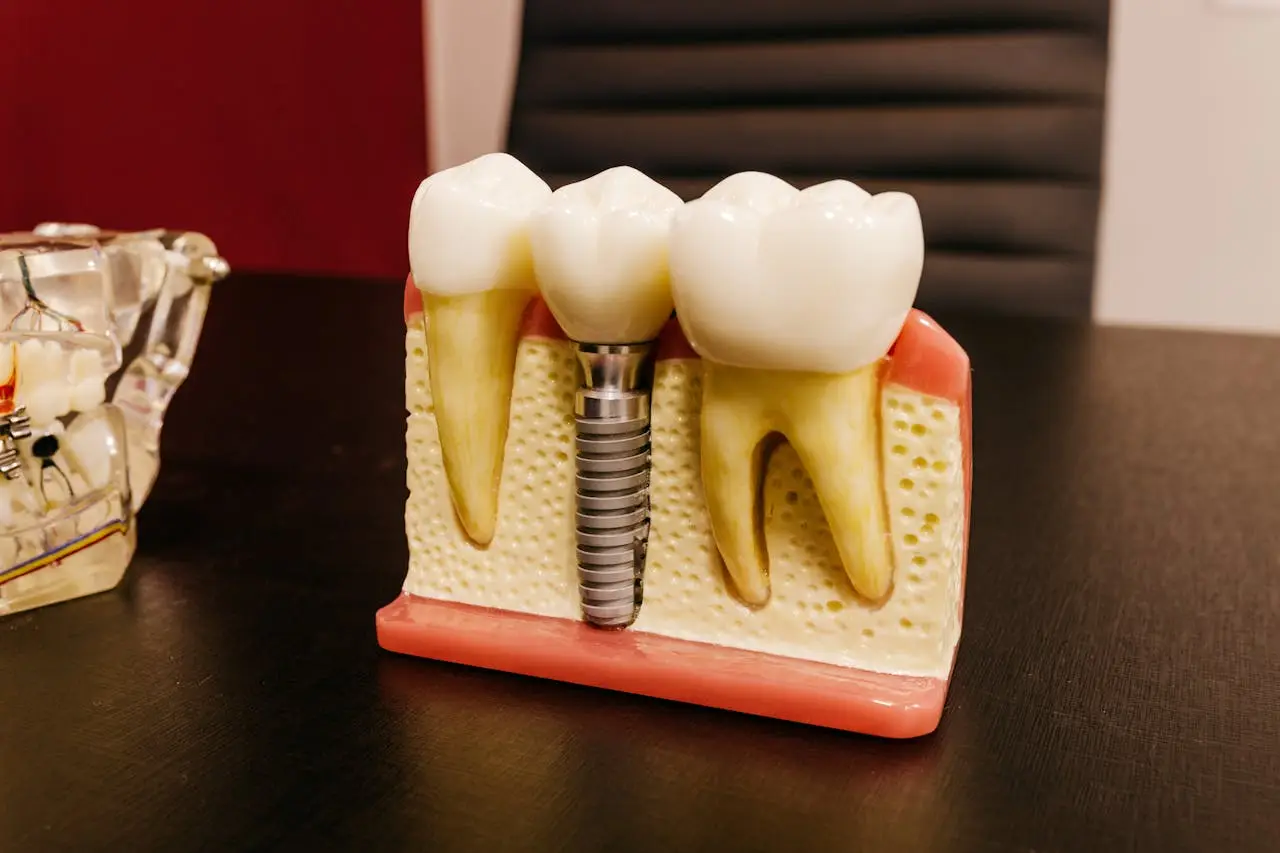
But there was a serious problem hiding in plain sight. Preparing a tooth for a crown removes between 60% and 75% of the original tooth structure. Healthy enamel, sound dentine, and functional cusps are all ground away just to make space for an artificial cap. The crown does not restore the tooth — it replaces most of it with a substitute.
Over the past two decades, the dental research community began asking uncomfortable questions. If this much healthy tooth is removed, the nerve is put under thermal stress, and the remaining stump is weakened — was the crown always the right answer? The evidence accumulated and the answer became clear: often, it was not.
Today, dental schools across Europe, North America, and Asia teach minimally invasive dentistry (MID) as the foundational standard of care. The question is no longer “how much do we cut?” but “how little can we cut and still do an excellent job?” Crown preparation is now reserved for situations where tooth structure is genuinely too compromised for a partial restoration.
In Kalyan West, this shift is being led at Redefine Dental Clinic by Dr. Gautam Shetty — an MDS Endodontist with 15+ years of specialist experience and over 10,000 root canal treatments performed. His entire practice philosophy is built on one principle: preserve every millimetre of natural tooth structure that can be preserved.
“The best dental restoration is always the most conservative one — the one that takes the least tooth, causes the least harm, and gives the most back to the patient long term.”
— Dr. Gautam Shetty, Redefine Dental Clinic, Kalyan West
2. What Is Actually Being Cut Away — Understanding Your Natural Tooth
To truly understand why conservation matters, you need to appreciate what a natural tooth actually is. It is not just a hard peg. It is a sophisticated biological structure that has evolved over millions of years to handle extraordinary forces — molar biting loads of 70 to 150 kg — while adapting, flexing, and repairing itself.
Enamel
Enamel is the outermost layer — the hardest biological material in the human body. Once lost, it cannot grow back. It provides a critical seal against bacteria and acids, and it bonds to modern adhesive materials far better than exposed dentine. Preserving enamel margins is essential for the long-term seal of any restoration.
Dentine
Dentine sits beneath the enamel and makes up the bulk of the tooth. Unlike enamel, dentine is slightly flexible — it bends under load rather than cracking. It contains living tubules connected to the nerve (pulp). Every millimetre of dentine removed during preparation brings the bur closer to the pulp and increases the risk of nerve death.
The Pulp — The Living Core
The pulp contains blood vessels, nerves, and connective tissue. A vital (living) tooth is healthier, more resistant to fracture, and more capable of cellular repair than a root-treated tooth. Every preparation step that stresses the pulp increases the chance that it will eventually die — requiring a root canal that could have been avoided.
The Periodontal Ligament
The periodontal ligament (PDL) suspends the tooth in its socket and provides proprioceptive feedback — the sense of how hard you are biting. This sensory intelligence is unique to a natural tooth. No implant, no artificial restoration, can replicate it. This is one of the most underappreciated reasons to save natural tooth structure.
When a crown is prepared, bur temperatures can briefly exceed 140°C inside the tooth. Even with water cooling, this thermal trauma is real. Studies show up to 15% of crowned teeth eventually need root canal treatment — not from disease, but from the heat and trauma of the crown preparation itself.
3. What Is a Dental Crown? The Full Story
A dental crown — also called a cap — is a full-coverage restoration that encases the entire visible portion of a tooth above the gum line. It is one of the oldest techniques in modern dentistry and has genuine value in the right clinical situation. But understanding precisely what it involves helps patients make truly informed decisions.
The Crown Preparation Process
To fit a crown, the dentist must reduce the tooth on all five surfaces — the biting surface and all four sides. This typically removes 1.5 to 2 mm of tooth structure on every surface, often more on the biting surface to accommodate ceramic or metal thickness. The result is a small, dramatically reduced stump. The crown sits over this stump and is cemented in place — it does not bond to it.
When Crowns Are Genuinely Indicated
Crowns are not inherently wrong. There are clear clinical situations where they are the correct choice:
- Teeth that have lost more than 60–70% of their crown structure
- Catastrophic fractures at or near the gum line
- Teeth used as anchors for a dental bridge
- Cases requiring significant shape or height correction
- Full mouth rehabilitation cases
The problem is not that crowns exist — it is that they have been vastly over-prescribed for decades. Many teeth that received crowns still had enough healthy structure to be conservatively restored with a ceramic onlay. The crown was chosen not because the tooth required it, but because it was the familiar default.
The Long-Term Crown Failure Cascade
Crowns are not permanent. The average lifespan is 10–15 years. When a crown needs replacing, the process removes further tooth structure to create a new seating surface. Each replacement cycle reduces the remaining tooth further. Eventually the stump is too small to support any restoration — and extraction becomes the only option.
This is what biomimetic dentists call the dental death spiral: large filling → crown → root canal + crown → implant → implant failure → denture. Every step is irreversible and more expensive than the last. The goal of conservative dentistry is to interrupt this spiral as early as possible.
4. What Is a Ceramic Onlay? The Conservative Revolution
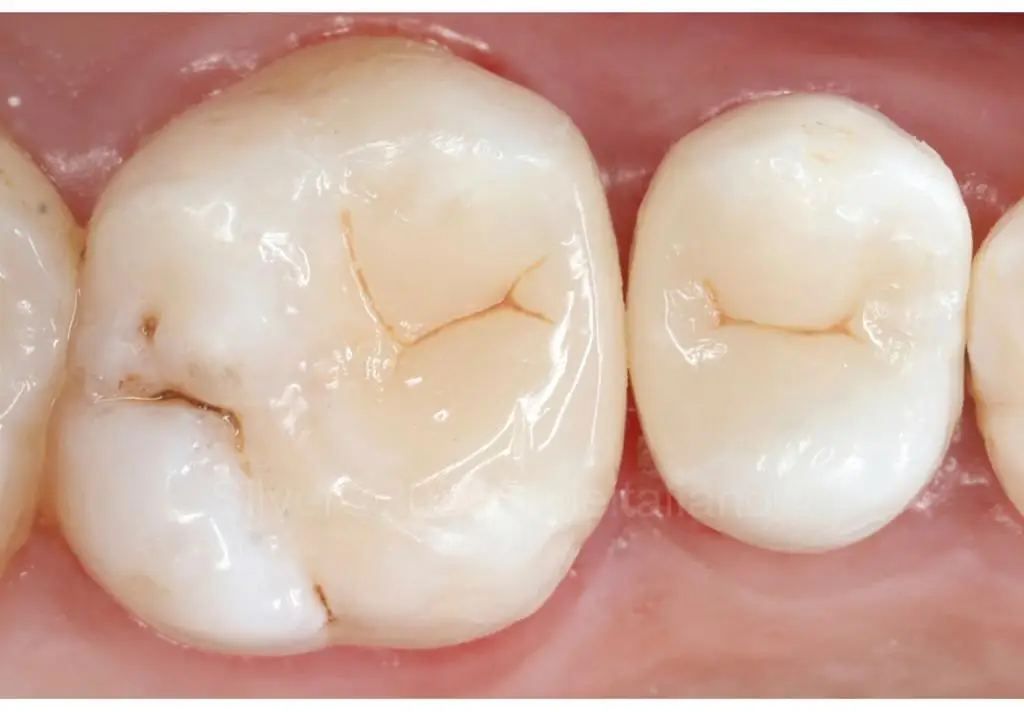
A ceramic onlay — also called an indirect partial restoration — is a custom-fabricated restoration that covers only the damaged or missing portion of a tooth. Rather than capping the entire tooth, an onlay fits precisely into and over the prepared area, bonding directly to the remaining tooth structure and becoming, in a real sense, part of the tooth itself.
The Onlay Preparation: Remove Disease, Not Health
When preparing a tooth for a ceramic onlay, the dentist removes only the damaged, decayed, or structurally compromised tissue. Healthy enamel and sound dentine are left entirely intact. The preparation is guided by one principle: remove disease, not health.
A well-designed onlay preparation removes as little as 10–20% of the original tooth volume — compared to 60–75% for a crown. The margins of the preparation are ideally kept entirely within enamel, which provides the best long-term adhesive seal.
The Bonding: Where the Magic Happens
The most transformative development enabling the onlay revolution is adhesive dentistry. When an onlay is bonded correctly, it does not merely sit on the tooth — it chemically fuses with it, creating a restoration-tooth complex that is biomechanically stronger than either component alone.
This is fundamentally different from how a crown works. A crown is held by mechanical grip and cement. An onlay is intimately bonded to enamel and dentine at a microscopic level. The tooth reinforces the onlay, and the onlay reinforces the tooth. This mutual reinforcement is the heart of biomimetic restoration philosophy.
Bonded ceramic onlays have been shown to increase the fracture resistance of a prepared tooth by up to 90% compared to unbonded restorations. Teeth restored with bonded ceramic onlays show fracture resistance approaching that of intact, unprepared natural teeth.
The Role of the Dental Operating Microscope
At Redefine Dental Clinic, every onlay procedure is performed under the Dental Operating Microscope — magnifying up to 25× with powerful illumination. This is not a luxury; it is a clinical necessity. Under the microscope, Dr. Shetty can identify the precise boundary between diseased and healthy tissue, verify the fit of the onlay with micron-level accuracy, and confirm that no cement excess remains at the margins before finalising the restoration. This level of precision is not possible without magnification.
5. Onlay vs Crown — The Complete Comparison
| Parameter | Dental Crown | Ceramic Onlay |
|---|---|---|
| Tooth structure removed | 60–75% | ✓ 10–20% only |
| Enamel preservation | Most enamel destroyed | ✓ Enamel margins preserved |
| Pulp (nerve) risk | High — thermal trauma during prep | ✓ Minimal |
| Root canal need after restoration | Up to 15% over 10 years | ✓ Less than 3% over 10 years |
| Bond to tooth | Cement grip — no true bond | ✓ Chemical adhesive bond — reinforces tooth |
| Fracture resistance | Moderate | ✓ High — approaches intact natural tooth |
| Gum health | Crown margins can irritate gum | ✓ Conservative margins preserve gum |
| Aesthetics | Good | ✓ Excellent — natural light transmission |
| Reversibility | None — irreversible preparation | ✓ More tooth saved for future options |
| Average lifespan | 10–15 years | ✓ 12–20+ years with proper care |
| Lifetime cost | Lower upfront, higher over life | ✓ Better long-term value |
6. Biomimetic Dentistry — Restoring Teeth the Way Nature Intended
Biomimetic dentistry — bio (life) + mimetic (imitation) — is a rigorously science-based dental philosophy that seeks to restore teeth in a way that mimics the mechanical and biological properties of the original tooth structure. It was pioneered by researchers like Dr. David Alleman, Dr. Pascal Magne, and Dr. Markus Blatz, and is now taught in leading dental schools worldwide.
The foundational insight is simple but profound: the natural tooth is an engineering masterpiece. Enamel is stiff and hard — it resists surface wear. Dentine is flexible — it absorbs impact and prevents crack propagation. The pulp nourishes, protects, and provides sensory feedback. These three layers work as an integrated system. When you sever this integration with a crown, you create a fundamentally different object — one that behaves very differently over decades.
The Stress-Distribution Problem with Crowns
In a natural tooth, biting forces are distributed through the structure in a well-adapted pattern. A crowned tooth changes this completely. The crown transmits force differently from natural enamel. At the interface between crown and stump, stress concentrations build up over years. Eventually the cement layer microleaks, the bond fails, and restoration breakdown begins — often with damaging consequences for the already-reduced tooth beneath.
A bonded ceramic onlay is designed to mimic the biomechanical behaviour of the structures it replaces. Modern lithium disilicate ceramic (e.max) has an elastic modulus close to natural enamel. The bonding system creates a gradual load transition. The result is a restoration that distributes stress naturally — protecting both the ceramic and the remaining tooth beneath.
The Role of Rubber Dam at Redefine Dental Clinic
Rubber dam isolation is used for every onlay procedure at Redefine Dental. It creates a perfectly dry, contamination-free field for bonding. Even microscopic contamination from saliva or blood can reduce bond strength by 40–60%. In a clinic serious about adhesive restorations, rubber dam is not optional — it is mandatory. In Kalyan West, most clinics do not use rubber dam at all. At Redefine Dental, it is the uncompromising standard at every appointment.
7. The Long-Term Maths — What Tooth Loss Really Costs You
The economic argument for conservation only becomes visible when you look at the full 30–40 year arc of a tooth’s life — not just the cost of today’s appointment.
The Crown Path Over 30 Years (A Common Scenario)
A 35-year-old in Kalyan gets a crown on a cracked molar. The first crown lasts 12 years. Replacement requires removing more tooth. The second crown lasts 8 years. By now the stump is very small. The pulp is inflamed. A root canal is done, a post and core placed, a third crown placed. Seven years later, the stump is declared non-restorable. The tooth is extracted. An implant is placed at ₹40,000–₹80,000 or more — possibly with bone grafting at additional cost.
Total treatment cost over 30 years: often ₹1,50,000–₹2,50,000 or more — plus multiple appointments, multiple anaesthesia events, and the psychological cost of losing a natural tooth in your early 60s.
The Onlay Path Over 30 Years
The same 35-year-old gets a ceramic onlay. The onlay lasts 15–18 years. It is replaced at around 50–53 — again conservatively, with a new onlay or modest upgrade. At 65, the patient still has a natural, vital or at least root-intact tooth. The tooth is still present, still functional, still providing bone stimulation, still requiring no implant surgery.
Every percentage of natural tooth structure preserved today is a banking of future treatment options. A tooth with more sound structure can be restored by more techniques with more predictability. The best implant is the natural tooth you never needed to extract.
8. Why Kalyan Patients are Choosing Onlays over Crown
The shift from metal-based restorations — silver amalgam fillings and porcelain-fused-to-metal crowns — to all-ceramic, tooth-coloured restorations is one of the most patient-visible changes in modern dentistry. But the benefits go far beyond appearance.
Lithium Disilicate — IPS e.max
IPS e.max (lithium disilicate glass ceramic) is the material of choice for ceramic onlays at Redefine Dental. It offers flexural strength of 360–400 MPa, excellent light transmission that mimics natural tooth translucency, and outstanding bond strength with resin-based luting agents. High strength means onlays can be made thin — as thin as 0.8 mm — reducing the amount of tooth reduction required. The aesthetics are so natural that a well-made e.max onlay is indistinguishable from natural enamel at normal viewing distances.
Why Tooth-Colour Is Also Biologically Important
Silver amalgam fillings are retained mechanically — requiring healthy tooth tissue to be deliberately removed to create retentive undercuts. They also expand and contract with temperature at a rate different from dentine, creating cyclic micro-stresses that crack cusps over years — the cause of most cracked tooth syndrome presentations seen in practice.
Tooth-coloured ceramic onlays are bonded, not mechanically retained. The preparation is strictly limited to disease removal only. They have a thermal expansion coefficient close to that of dentine, causing no damaging cyclic stresses. They contain no mercury, no metal ions, no risk of galvanic corrosion. For patients in Kalyan, Dombivli, and Thane with old large silver fillings, the ceramic onlay is the ideal metal-free replacement.
Onlay vs Large Direct Composite Filling
A common question: why not just use a large tooth-coloured composite filling? Composite is excellent for smaller restorations, but has significant limitations as cavities grow. Large direct composites shrink during polymerisation, creating internal stresses that can crack the restoration or the remaining tooth walls. They wear faster than ceramic under heavy function. An indirect ceramic onlay, fabricated outside the mouth and bonded as a single fully cured unit, is superior in every measurable parameter for significantly damaged posterior teeth.
9. Why Dr. Gautam Shetty at Redefine Dental Is Kalyan’s Best Choice for Ceramic Onlays
Choosing a dentist to perform a ceramic onlay is not the same as choosing a dentist for a cleaning. The procedure demands a specific intersection of specialist knowledge, precision technology, clinical philosophy, and material science expertise. Not all dentists who offer onlays deliver the same quality — and the difference in outcome is measurable in years of restoration life.
The Specialist Advantage
Dr. Gautam Shetty is an MDS Endodontist — a postgraduate specialist in root canal treatment and tooth biology. He brings 15+ years of post-specialist clinical experience and a case portfolio exceeding 10,000 root canal treatments. This depth of understanding of tooth anatomy, pulp biology, and restoration mechanics is simply not available in general practice.
An endodontist understands the pulp-dentine complex in a way that most dentists do not. Dr. Shetty knows exactly how close to the pulp a preparation can extend before irreversible damage occurs. He can see signs of pulp stress that others miss. He understands how restorative materials interact with the pulp biologically. This allows him to plan and execute onlay preparations that are maximally conservative without being inadequately retentive — a fine clinical line that requires both technical skill and specialist understanding.
Three Non-Negotiables at Redefine Dental Clinic, Kalyan West
- Dental Operating Microscope — every procedure, every time, up to 25× magnification
- Rubber dam isolation — mandatory for all adhesive restorations, ensuring a contamination-free bond
- Biomimetic principles — remove disease only, preserve all healthy structure, restore with the most conservative option available
In Kalyan West, most clinics do not use the microscope. Most do not use rubber dam. At Redefine Dental, these are not optional extras — they are the standard protocol for every single patient. This is the difference between a restoration that lasts 8 years and one that lasts 18.
Shifting the Narrative in Kalyan West
Kalyan, Dombivli, and Thane have a growing, educated patient population increasingly willing to invest in quality dental care — but historically underserved by specialist-grade services. Dr. Shetty established Redefine Dental specifically to bring international-standard conservative dentistry to this region — without requiring patients to travel to Mumbai for world-class care.
The conversation at Redefine Dental is different. When a patient arrives with a cracked molar or failing large filling, the first question is not “which type of crown would you like?” It is: “How much tooth can we save — and what is the best restoration that achieves that goal?” This reframing is the narrative shift Dr. Shetty has introduced to local dental care, and it is why patients from across Kalyan-Dombivli-Thane choose Redefine Dental for restorations simply not offered at the same standard elsewhere in the region.
“In 15 years of specialist practice, the most rewarding conversations are with patients who come back years later and say they forgot which tooth we treated. That invisibility — of the restoration, of the intervention — is the highest standard we can reach.”
— Dr. Gautam Shetty, MDS Endodontist, Redefine Dental Clinic, Kalyan West
10. What Happens at Your Appointment — The Redefine Dental Process
Patients at Redefine Dental enter a clinical workflow that is distinctly different from a standard dental appointment. Every step is designed around one goal: the best possible long-term outcome for the tooth.
Appointment 1 — Diagnosis and Treatment Planning
Dr. Shetty begins with a thorough clinical and radiographic examination — not a cursory glance, but a complete assessment of the tooth’s vitality, structural integrity, periodontal status, and occlusal load. The diagnosis is discussed in detail: what is happening, why it happened, what all the options are, and the long-term implications of each.The decision is made collaboratively, with the patient fully informed before any work begins.
Appointment 2 — Preparation Under Microscope and Rubber Dam
The onlay preparation is performed under the Dental Operating Microscope with rubber dam in place. Only diseased or structurally unsound tissue is removed. A caries indicator dye is used to verify all infected dentine is removed without over-cutting. An intraoral scan or impression is taken. A high-quality provisional restoration protects the tooth in the interim.
Laboratory Fabrication
The ceramic restoration is fabricated to a detailed prescription — specifying material, shade, contour, and occlusal morphology. The finished restoration is not accepted unless it meets the required standard. No compromises on material quality or fit.
Appointment 3 — Fitting, Bonding, and Final Verification
The ceramic onlay is fitted under the microscope. Margins are checked meticulously. Contacts with adjacent teeth are verified. Occlusion is adjusted before bonding — not after. Bonding is performed under rubber dam using the full adhesive protocol. Patients leave with a restoration they can trust — and a follow-up appointment to verify comfort at the 2-week mark.
11. Who Is the Right Candidate for a Ceramic Onlay?
Ceramic onlays are appropriate for far more clinical situations than current prescribing patterns in Kalyan and across India reflect. Here is a practical guide.
You May Be an Ideal Onlay Candidate If:
- You have been told you need a crown and want to know if a more conservative option exists
- You have cracked cusps on a back tooth where most of the tooth structure is still intact
- You have old, large silver amalgam fillings that are cracking, leaking, or need replacement
- You want a tooth-coloured, metal-free restoration for your back teeth
- You value long-term tooth preservation and want the most conservative high-quality option
- You have been told your tooth is “borderline” for a crown — these are often the ideal onlay cases
- You are a patient in Kalyan, Dombivli, or Thane seeking specialist-level restorative care
A Crown May Still Be Your Best Option If:
- More than 60–70% of your tooth’s crown structure has been lost to decay, fracture, or previous large restorations
- All four walls of the tooth are significantly weakened and cannot serve as reliable onlay margins
- You need a bridge anchor tooth and crown preparation is integral to the bridge design
- Your bite requires significant vertical height increase that cannot be achieved with a partial restoration
- The tooth has fractured at or near the gum line and requires crown lengthening surgery first
The only way to know definitively which option is right for your tooth is a thorough clinical examination with a specialist. At Redefine Dental, this assessment is performed with the same rigour and optical magnification that characterises every procedure. You will leave knowing not just what needs to be done, but why — with the evidence explained clearly and completely.
12. Frequently Asked Questions
Is a ceramic onlay as strong as a crown?
Yes — and in many situations, stronger in terms of the overall tooth-restoration system. A bonded ceramic onlay reinforces the remaining tooth by distributing stress across the bond interface. The tooth-onlay complex as a whole can achieve fracture resistance approaching that of an intact tooth. A crown does not reinforce the remaining stump — it caps it, while the weakened stump beneath remains the vulnerability.
How long does a ceramic onlay last?
Published clinical studies report 10-year survival rates of 85–93% for bonded ceramic onlays, with many restorations lasting 15–20 years or longer under ideal conditions. At Redefine Dental, all controllable factors — material quality, microscope precision, rubber dam bonding protocol — are optimised. Patients who maintain their dental hygiene and review appointments can expect excellent longevity.
Will a ceramic onlay look natural?
Yes. Modern lithium disilicate ceramic closely replicates the light transmission, translucency, and colour depth of natural enamel. A well-shaded e.max onlay is indistinguishable from natural tooth structure at normal conversational distances — even by trained dental professionals.
Is the onlay procedure more painful than a crown?
Typically, the opposite. Because the onlay preparation removes less tooth, it creates less thermal trauma to the pulp and less post-operative sensitivity. Patients at Redefine Dental frequently comment that they experienced less sensitivity from their onlay than from previous crown preparations at other clinics.
Can I get an onlay after a root canal?
Yes — and this is often precisely the situation where onlays offer the greatest advantage over crowns. A post-root-canal tooth that retains reasonable wall height and thickness is an excellent onlay candidate. Dr. Shetty’s combined endodontic and restorative expertise is uniquely valuable here — he can assess the case holistically, perform the root canal and the onlay in the same specialist environment, under the same microscope, to the same standard.
Why do most dentists in Kalyan still recommend crowns?
Crown preparation is more widely taught and is more time-efficient per appointment. Many dental insurance systems historically provided better coverage for crowns, creating a financial incentive structure that influenced prescribing patterns. Delivering excellent onlays requires specialist knowledge, investment in equipment (microscope, rubber dam, premium ceramic), and willingness to spend more clinical time with each patient. At Redefine Dental, all of this is in place — and the result is a meaningfully better long-term outcome for the patient.
Why do I need a specialist for an onlay?
Ceramic onlays under the microscope with rubber dam require a different level of precision than a standard crown preparation. The margins are thinner, the preparation is less forgiving of imprecision, and the bonding protocol requires a completely dry, controlled environment. Dr. Shetty’s MDS training, 10,000+ microscope cases, and strict rubber dam protocol mean the restoration is placed at a standard that general practice — without this equipment and training — simply cannot replicate.
How do I care for my ceramic onlay?
A ceramic onlay requires no special maintenance. Twice-daily brushing with a soft brush and fluoride toothpaste, daily flossing, and six-monthly professional cleaning and review appointments are all that is needed. Patients who clench or grind their teeth may benefit from a night guard to protect the onlay — this is assessed and discussed during the consultation at Redefine Dental.
The Tooth You Save Today Is the Investment That Pays Forever
The shift from crown-cutting to conservation is one of the most important developments in modern dentistry — and it benefits patients profoundly. Every millimetre of healthy enamel preserved, every healthy cusp left intact, every pulp protected from unnecessary thermal trauma is a deposit into a biological account that pays dividends for decades.